
IP67 vs IP68 USB Connectors: Ingress Protection Rating Guide
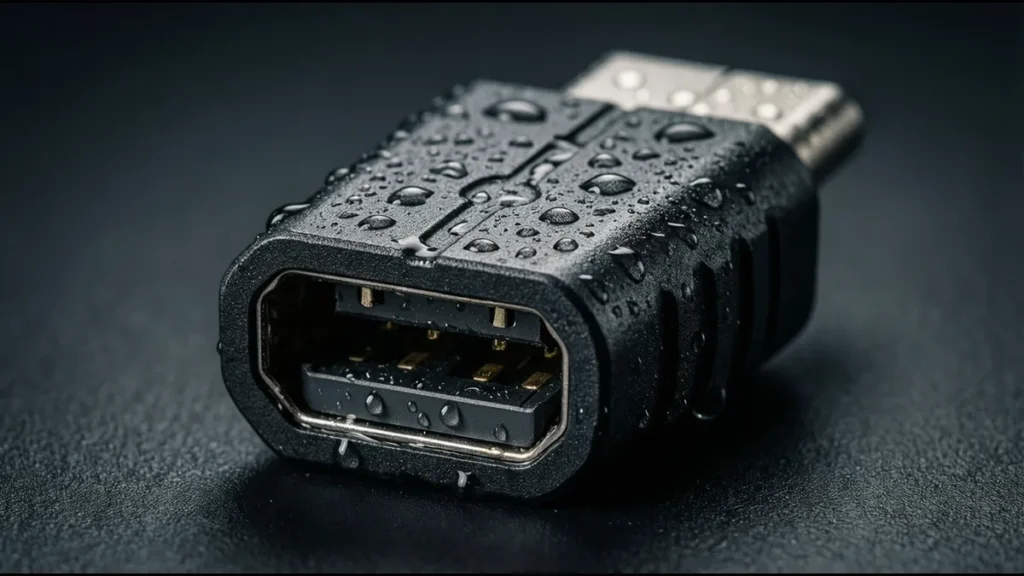
IP67 and IP68 are the two most common ratings for waterproof USB connectors used in industrial, outdoor, and marine applications. Both mean “dust-tight and waterproof” — but the details matter. An IP68 connector survives conditions that would destroy an IP67 connector, and an IP67 connector costs less than an IP68 connector for applications that don’t need continuous submersion. Understanding where the ratings differ, what the test conditions actually mean, and how to match the rating to your application prevents both over-specification (wasting money) and under-specification (field failures).
IP Rating System: How It Works
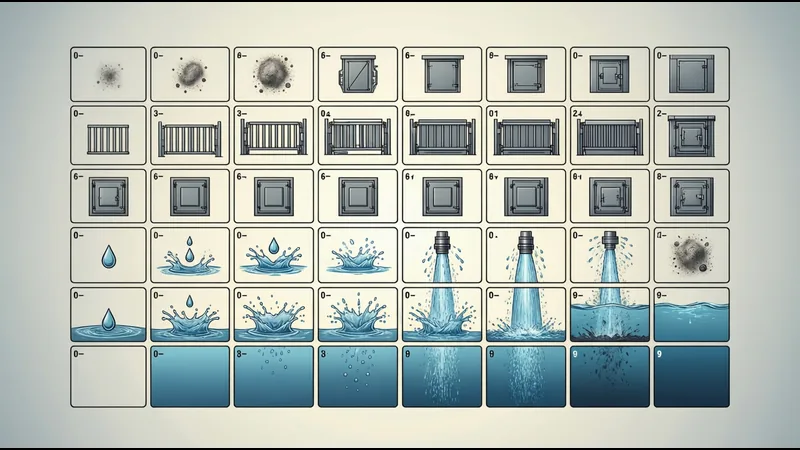
The IP (Ingress Protection) code is defined by IEC 60529. It consists of “IP” followed by two digits:
First Digit: Solid Particle Protection
| Digit | Protection | Test Condition |
|---|---|---|
| 0 | No protection | — |
| 1 | Objects > 50mm | 50mm probe |
| 2 | Objects > 12.5mm | 12.5mm probe |
| 3 | Objects > 2.5mm | 2.5mm probe |
| 4 | Objects > 1.0mm | 1.0mm wire |
| 5 | Dust-protected | Dust chamber, 8 hours, some ingress allowed but no harmful amount |
| 6 | Dust-tight | Dust chamber, 8 hours, no ingress |
Both IP67 and IP68 use first digit 6 — dust-tight. No dust enters the connector under the test conditions. This is the maximum solid protection rating.
Second Digit: Liquid Protection
| Digit | Protection | Test Condition | Duration |
|---|---|---|---|
| 0 | No protection | — | — |
| 1 | Dripping water | 1mm/min vertical drip | 10 min |
| 2 | Dripping water (15° tilt) | 3mm/min, 4 positions | 2.5 min/position |
| 3 | Spraying water | Spraying at 60° from vertical, 10 L/min | 5 min |
| 4 | Splashing water | Spraying from all directions, 10 L/min | 5 min |
| 5 | Water jets | 6.3mm nozzle, 12.5 L/min, 30 kPa | 15 min |
| 6 | Powerful water jets | 12.5mm nozzle, 100 L/min, 100 kPa | 3 min |
| 6K | High-pressure water jets | 6.3mm nozzle, 75 L/min, 1000 kPa | 3 min |
| 7 | Temporary immersion | 1m depth, still water | 30 min |
| 8 | Continuous immersion | Depth and duration per manufacturer specification | Per specification |
| 9K | High-pressure, high-temperature jets | 14–16 L/min, 80°C, 80–100 bar | 30s × 4 positions |
IP67 and IP68 differ only in the second digit: 7 (temporary immersion) vs 8 (continuous immersion).
IP67: Temporary Immersion
Test Condition
- Depth: 1 meter below the water surface
- Duration: 30 minutes
- Water: Fresh water, still (no agitation)
- Temperature: Water at standard laboratory temperature
What IP67 Means in Practice
An IP67 USB connector can survive:
- Being dropped in a puddle and retrieved within 30 minutes
- Heavy rain and water splash from any direction
- Brief submersion during cleaning or accidental flooding
- High-pressure water jets (if also rated IP65 or IP66 — IP67 implies IP65/66 resistance)
What IP67 Does NOT Mean
- Not rated for continuous submersion. The test is 30 minutes. A connector submerged for hours or days may leak even if it passes IP67.
- Not rated for pressurized water. The test uses still water at 1m depth (approximately 10 kPa hydrostatic pressure). Water jets (IP65/66) are a separate test. A connector rated IP67 without also being rated IP65 or IP66 may fail under water jet exposure.
- Not rated for hot water. The test uses water at laboratory temperature. Hot water softens gasket materials and may cause leakage.
- Not rated for the unmated condition. IP67 applies to the mated condition — with a plug inserted. The unmated port typically rates IP54 or less unless a sealing cap is installed.
IP68: Continuous Immersion
Test Condition
- Depth: Specified by manufacturer (commonly 1.5m, 3m, or 10m)
- Duration: Specified by manufacturer (commonly 24 hours, 72 hours, or continuous)
- Water: Fresh water (salt water is a separate consideration)
- Temperature: Specified by manufacturer
The Manufacturer Specification Caveat
Unlike IP67, which has a fixed test condition, IP68 allows the manufacturer to define the depth and duration. This means:
- IP68 at 1.5m / 24 hours is barely better than IP67
- IP68 at 10m / 7 days is substantially more robust
- IP68 at 50m / continuous is suitable for underwater equipment
Always check the manufacturer’s specified depth and duration, not just the “IP68” label. A datasheet that says “IP68” without specifying depth and duration is incomplete.
What IP68 Means in Practice
An IP68 USB connector (at a reasonable specification, e.g., 3m / 72 hours) can survive:
- Continuous submersion in shallow water
- Extended flooding conditions
- Underwater deployment (within rated depth)
- Marine environments with wave splash and periodic submersion
What IP68 Does NOT Mean
- Not necessarily rated for high-pressure water jets. IP68 tests immersion (hydrostatic pressure), not jets (dynamic pressure). If the application involves pressurized water (washdown, cleaning), look for IP69K or a combined IP68 + IP69K rating.
- Not rated for salt water unless specified. The IEC 60529 test uses fresh water. Salt water is more corrosive and has different density and conductivity. For marine applications, verify the connector has been tested in salt water or salt spray conditions.
- Not permanent. Gasket materials age, compress, and degrade. An IP68 connector may lose its rating after 2–5 years of service depending on temperature, UV exposure, and chemical exposure. Specify a gasket replacement interval for critical applications.
IP67 vs IP68: Direct Comparison
| Parameter | IP67 | IP68 |
|---|---|---|
| Dust protection | Dust-tight (no ingress) | Dust-tight (no ingress) |
| Water test method | Immersion | Immersion |
| Test depth | Fixed at 1m | Manufacturer-specified |
| Test duration | Fixed at 30 min | Manufacturer-specified |
| Water pressure | ~10 kPa (hydrostatic) | Per depth specification |
| Water temperature | Lab temperature | Per specification |
| Typical cost premium | 1.5–2× non-sealed | 2–3× non-sealed |
| Gasket material | Silicone or EPDM | Silicone or fluorosilicone |
| Gasket compression | 15–25% | 20–35% |
| Testing requirement | Air leak test (batch) | Air leak + water immersion (batch) |
| Re-mating seal life | 500–1,000 cycles | 1,000–5,000 cycles |
| Appropriate for | Rain, splash, brief submersion | Continuous submersion, flooding |
Sealing Design Differences
IP67 Sealing Design
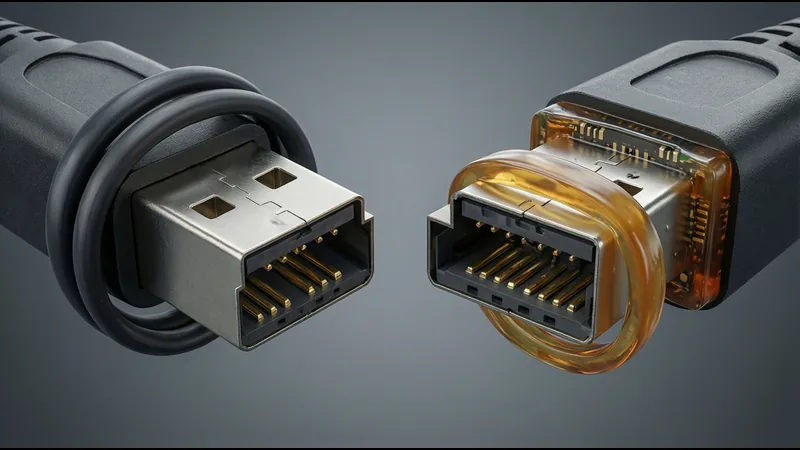
An IP67 USB connector uses two sealing interfaces:
- Panel gasket: A perimeter gasket between the connector flange and the enclosure panel. Typically silicone or EPDM, 1–2mm thick, compressed 15–25% at installation.
- Mated interface seal: A radial seal between the USB plug body and the connector port. Achieved through either:
– An overmolded boot on a custom cable that mates with a sealing surface on the connector
– A compression ring inside the connector that seals against the plug body
The internal contact area is typically potted with epoxy to prevent water from traveling along contact pins to the PCB. This potting is the same for IP67 and IP68.
IP68 Sealing Design
IP68 adds or enhances:
- Thicker gasket: 2–3mm thick, compressed 20–35%. The higher compression fills larger surface irregularities in the panel cutout, providing a more reliable seal under pressure.
- Double gasket (some designs): Two parallel gaskets — a primary gasket and a backup gasket. If the primary gasket leaks, the backup gasket provides redundancy. Common in military and subsea connectors.
- Enhanced internal sealing: Instead of simple epoxy potting, IP68 connectors may use full overmolding of the contact area — the connector body is injection-molded around the contact lead frame, eliminating potting voids.
- Stronger housing: The housing material may be thicker or use higher-strength plastic (LCP instead of PBT) to resist deformation under pressure. At 10m depth, the hydrostatic pressure is 100 kPa — enough to deform a thin PBT housing and compromise the seal.
- Gasket material upgrade: Fluorosilicone instead of silicone for better chemical resistance, or EPDM with higher durometer (60–70 Shore A) for better compression resistance.
Gasket Materials Comparison
| Material | Temperature Range | Compression Set | Chemical Resistance | UV Resistance | Cost |
|---|---|---|---|---|---|
| Silicone | −60°C to +200°C | Excellent | Poor (swells in solvents) | Good | Low |
| Fluorosilicone | −60°C to +175°C | Excellent | Good (resists fuels, oils) | Good | Medium |
| EPDM | −40°C to +150°C | Good | Good (resists water, steam) | Poor | Low |
| Fluorocarbon (Viton) | −20°C to +200°C | Good | Excellent | Good | High |
Choosing the Right Gasket Material
| Application | Recommended Material | Reason |
|---|---|---|
| Outdoor (rain, UV) | Silicone | Good UV resistance, wide temperature range |
| Industrial (oil, fuel) | Fluorosilicone | Resists hydrocarbon exposure |
| Food processing (steam, hot water) | EPDM | Resists steam, high temperature |
| Marine (salt water) | Fluorosilicone or Viton | Resists salt water, chemical degradation |
| Chemical processing | Viton | Best chemical resistance |
| Extreme cold (−50°C+) | Silicone | Lowest temperature flexibility |
Testing and Verification
IP67 Test Procedure (IEC 60529)
- Pre-test: Verify connector is properly mounted in a test panel, with a mated plug (or sealing cap for unmated test).
- Immersion: Lower the test panel into a water tank until the connector is 1m below the surface.
- Duration: 30 minutes.
- Post-test: Remove from water, dry exterior.
- Inspection: Open the connector and inspect for water ingress. Any visible water inside the connector constitutes failure.
- Dielectric test: Apply 500V AC between contacts and shell for 1 minute. No dielectric breakdown or flashover.
IP68 Test Procedure
- Pre-test: Same as IP67.
- Immersion: Lower to manufacturer-specified depth (or equivalent pressure tank).
- Duration: Manufacturer-specified (commonly 24–168 hours).
- Post-test: Same as IP67.
- Inspection: Same as IP67 — no water ingress.
- Dielectric test: Same as IP67.
Production Testing
For production quality control, 100% water immersion testing is impractical. Instead, manufacturers use air leak testing:
| Test Method | Sensitivity | Test Time | Application |
|---|---|---|---|
| Air pressure decay | 0.5–1 cc/min leak rate | 5–10 seconds | High-volume production |
| Helium leak detection | 10⁻⁶ cc/sec | 10–30 seconds | High-reliability, military |
| Water pressure tank | Visual inspection | 2–5 minutes | Sample testing, qualification |
Air pressure decay testing pressurizes the connector interior to 30–50 kPa and measures pressure drop over 5–10 seconds. If pressure drops more than the threshold (indicating a leak), the part is rejected. This test is performed on 100% of production units for IP67+ connectors.
Application Guide: Which Rating Do You Need?
Choose IP67 If:
- The connector will be exposed to rain, splash, or occasional brief submersion
- The connector is mounted on outdoor equipment but not intended for underwater use
- The application involves washdown cleaning but the connector is not submerged during cleaning
- The connector may be accidentally submerged (dropped in water) but retrieved quickly
- Budget constraints exist (IP67 costs 30–50% less than IP68)
Typical applications: Outdoor kiosks, industrial control panels, vending machines, automotive exterior, construction equipment, agricultural equipment
Choose IP68 If:
- The connector will be continuously or frequently submerged
- The connector is deployed in an environment where flooding is possible and may last hours or days
- The connector is used in marine/underwater equipment
- The connector is in a pit, sump, or below-grade installation where water accumulation is possible
- The equipment is valuable enough that connector failure has significant cost consequences
Typical applications: Marine electronics, underwater sensors, wastewater treatment, submersible pumps, underground equipment, military field equipment
Choose IP69K If:
- The connector will be exposed to high-pressure, high-temperature washdown
- The application involves steam cleaning or pressure washing
- Food processing, pharmaceutical, or other sanitary applications requiring clean-in-place (CIP)
Typical applications: Food processing equipment, pharmaceutical manufacturing, vehicle wash systems, mining equipment
IP67/IP68 and the Unmated Condition
A critical and often-overlooked aspect of IP ratings: the rating applies to the mated condition. When the USB plug is removed, the port is open and unprotected.
| Condition | Typical IP Rating | Protection Level |
|---|---|---|
| Mated (plug inserted, cable connected) | IP67 or IP68 (as rated) | Full protection |
| Unmated with sealing cap installed | IP65–IP67 (depends on cap design) | Good protection |
| Unmated, open (no cap) | IP54 or less | Splash/dust protection only |
Solutions for Unmated Protection
- Tethered sealing cap: A cap attached to the connector by a lanyard. When the port is not in use, the cap is inserted, providing IP65–IP67 protection. The cap must be tethered (not removable) to prevent loss.
- Automatic shutter: A spring-loaded shutter inside the connector that closes when the plug is removed. Provides IP54–IP65 protection without a cap. More expensive but more convenient for frequent mating cycles.
- Screw-in sealing plug: A threaded plug that screws into the connector opening. Provides IP67–IP68 protection. More secure than a push-in cap but slower to operate.
For equipment where the port may be open for extended periods (spare ports, diagnostic ports), specify a connector with a tethered cap or automatic shutter. An IP68 connector with an open port provides less protection than a IP54 connector with a sealed cap.
Common Misconceptions
“IP68 is always better than IP67”
Not necessarily. IP68 means the connector passed a manufacturer-defined immersion test. If the manufacturer specifies IP68 at 1m / 24 hours, it’s barely different from IP67 (1m / 30 minutes). Always check the depth and duration. An IP67 connector rated for 1m / 30 minutes may be more reliable than an “IP68” connector rated for 1m / 24 hours if the IP67 connector has better gasket design and materials.
“IP67 means waterproof”
IP67 means the connector passed a specific test (1m / 30 min / still water). It does not mean the connector is “waterproof” in all conditions. High-pressure water, hot water, chemical solutions, and continuous exposure can all cause leakage in an IP67 connector. “Water-resistant” is a more accurate term.
“Higher IP rating means better connector”
The IP rating is one specification among many. A connector with IP68 but poor contact plating, weak shell, or low mating cycle life is worse than an IP67 connector with excellent overall specifications. Evaluate the full datasheet, not just the IP rating.
“IP rating is permanent”
Gaskets age, compress, and degrade. An IP68 connector may lose its rating after 2–5 years of thermal cycling, UV exposure, or chemical contact. For critical applications, specify a gasket replacement interval and re-test the connector’s sealing after extended service.
Related Reading: waterproof stacked USB connectors · how to waterproof a USB connector · industrial USB connector guide · automotive-grade stacked USB connector