
Waterproof IP67/IP68 Stacked USB Connectors for Harsh Environments
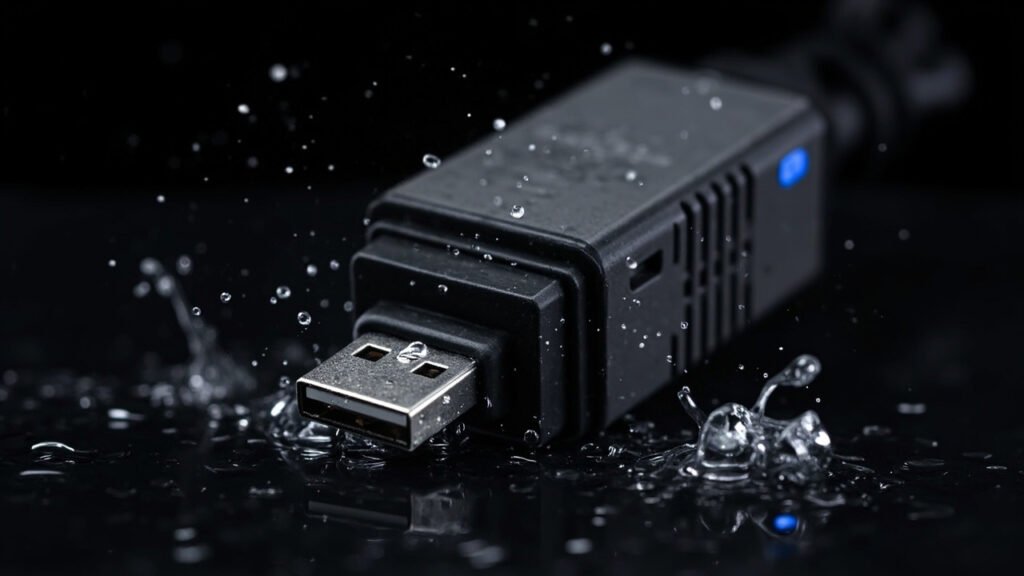
Waterproof IP67/IP68 Stacked USB Connectors for Harsh Environments
Most USB connectors live in comfortable environments — offices, living rooms, server rooms where temperature and humidity are controlled. Stacked USB connectors in industrial and outdoor applications don’t get that luxury. They face rain, dust, vibration, salt spray, temperature swings from −40°C to +85°C, and sometimes full submersion.
A waterproof stacked USB connector — properly designed and rated to IP67 or IP68 — survives all of this. But not all “waterproof” connectors deliver the same level of protection. Here’s what the ratings mean, how the sealing actually works, and what to specify when your stacked USB connector needs to endure harsh environments.
IP Ratings Explained for Stacked USB Connectors
The IP (Ingress Protection) code tells you exactly what a connector is protected against:
| Rating | Dust Protection | Water Protection |
|---|---|---|
| IP65 | Dust-tight (no ingress) | Water jets from any direction (12.5 L/min, 30 kPa) |
| IP66 | Dust-tight | Powerful water jets (100 L/min, 100 kPa) |
| IP67 | Dust-tight | Temporary immersion (1m depth, 30 minutes) |
| IP68 | Dust-tight | Continuous immersion (depth and duration specified by manufacturer) |
| IP69K | Dust-tight | High-pressure, high-temperature water jets (steam cleaning) |
For stacked USB connectors, IP67 is the most common target for industrial and outdoor applications. IP68 adds continuous submersion capability — relevant for marine, wastewater, and some food processing environments. IP69K is niche (primarily food/beverage processing equipment that gets steam-cleaned), but the connector materials need to survive 80°C water at 100 bar pressure.
Critical distinction: An IP rating applies to the mated condition — with a USB plug inserted. The unmated (open) condition is a separate rating, usually IP54 or less unless there’s a tethered cap or automatic shutter mechanism.
How Waterproof Sealing Works in a Stacked Connector
A waterproof stacked USB connector uses multiple sealing interfaces:
Panel Seal (Connector-to-Enclosure)
The connector body has a perimeter gasket — typically silicone, EPDM, or fluorosilicone — that compresses against the enclosure panel when mounted. This prevents water and dust from entering the enclosure through the connector cutout.
Design considerations:
- Gasket compression should be 15–30% for silicone, 20–35% for EPDM
- Panel surface finish affects seal quality — machined surfaces are better than stamped/punched
- The gasket groove in the connector housing must maintain consistent depth; ±0.05mm tolerance is typical for reliable sealing
- UV exposure degrades EPDM faster than silicone; for outdoor applications, specify silicone or fluorosilicone gaskets
Mated Seal (Connector-to-Plug)
When a USB plug is inserted, a secondary seal around the plug body prevents water ingress through the port opening. This is harder to achieve than the panel seal because the USB plug shape isn’t designed for sealing — it has square corners and a rectangular cross-section that’s difficult to seal against.
Two common approaches:
1. Overmolded boot on the plug: A custom USB cable with an overmolded sealing boot that mates with the connector housing. Effective but restricts the user to proprietary cables.
2. Compression ring in the connector: A compliant ring inside the connector port that seals against a standard USB plug body. Less effective than a mated boot but allows standard USB cables.
For IP67, approach 1 (mated boot) is typical. For IP65 or lower, approach 2 may be adequate.
Internal Seal (Connector Body)
The connector body itself must prevent water from traveling along the contact pins into the PCB. This is achieved with:
- Epoxy potting of the rear contact area
- Overmolding of the connector body onto the lead frame
- Internal gaskets at the lead frame-to-housing interface
For stacked connectors, the internal seal is more complex because there are two port cavities and more contacts. The potting or overmolding must fill both cavities completely without voids.
Material Selection for Waterproof Stacked Connectors
Standard connector materials don’t survive harsh environments for long:
| Component | Consumer Grade | Waterproof Industrial Grade |
|---|---|---|
| Housing | PBT (absorbs moisture, warps) | LCP or PPS (minimal moisture absorption) |
| Contacts | Brass with gold flash (corrodes) | Phosphor bronze with 15–30µ” gold over 50µ” Ni |
| Shell | SPCC steel, thin Ni plate (rusts) | SUS304 or SUS316L stainless steel |
| Gasket | None | Silicone (outdoor) or fluorosilicone (chemical) |
| Potting | None | Two-part epoxy, thermally matched to housing CTE |
Why LCP instead of PBT: PBT absorbs up to 0.2% moisture by weight. In a humid environment with daily temperature cycling, this absorbed moisture expands and contracts, eventually causing micro-cracks in the connector housing. Those cracks become water ingress paths. LCP absorbs <0.02% moisture and is dimensionally stable across the full temperature range.
Why stainless steel instead of SPCC: The nickel plating on SPCC steel shells is a barrier coating — not sacrificial like zinc. Any scratch or pinhole in the plating exposes the underlying steel, which rusts. Stainless steel doesn’t need a coating to resist corrosion. For marine or coastal environments (salt spray), specify SUS316L — the molybdenum content provides substantially better pitting resistance than SUS304.
Testing a Waterproof Stacked USB Connector
When a manufacturer claims “IP67 rated,” what testing should back that up?
Production Testing vs Type Testing
Type testing verifies the design. Production testing verifies each unit. The difference matters:
Type testing (design verification):
- IEC 60529: IP67 test — 1m submersion, 30 minutes, no water ingress
- ISO 9227: Salt spray test — 96+ hours, 5% NaCl at 35°C
- Thermal cycling: −40 to +85°C, 100+ cycles, verify seal integrity after cycling
- Vibration: Random vibration profile per IEC 60068-2-64
Production testing (per-unit verification):
- Air leak test (pressure decay): Easier to automate than water submersion. The connector is pressurized with air; pressure decay over time indicates a seal leak. Equivalent to IP67 water test if the leak rate specification is correctly correlated.
- Visual inspection of gasket placement and potting coverage
A manufacturer who only does type testing is trusting their process consistency without verifying it. A manufacturer who does production air leak testing on every unit is actually guaranteeing that each connector meets its IP rating.
Application Profiles
Outdoor EV Charging Station
An EV charger outside in Chicago or Harbin sees −30°C in winter, +40°C in summer, rain, snow, and salt spray from nearby roads. The stacked USB connector for the maintenance/diagnostic port needs to survive all of this for 10+ years.
Specification:
- IP67 minimum, IP68 preferred for locations with standing water risk
- −40 to +85°C operating (with +105°C peak for solar loading on the enclosure)
- SUS316L stainless steel shell
- Silicone panel gasket (UV-stable)
- Mated boot seal with tethered dust cap for unmated protection
- 5,000+ mating cycle rating (service technician visits over 10 years)
Marine Navigation Equipment
On a boat deck or bridge, the connector faces salt spray continuously and occasional direct seawater exposure. Galvanic corrosion is a real concern — the connector shell is at chassis ground potential, and salt water creates a conductive path to any nearby metal at a different potential.
Specification:
- IP68 (continuous submersion possible in deck-mounted locations)
- SUS316L shell (316L, not 304 — the molybdenum matters for seawater)
- Fluorosilicone gaskets (chemical resistance to diesel, oil, cleaning solvents)
- Gold plating ≥30µ” on all contact surfaces (salt spray protection)
- Sacrificial zinc anode or isolated mounting if galvanic corrosion is a concern
Agricultural Equipment
Tractors, combines, and irrigation controllers operate in dust, mud, fertilizer chemicals, and high-pressure washdown. The stacked USB connector for a precision agriculture controller sees every environmental extreme at once.
Specification:
- IP67 minimum, IP69K if steam or high-pressure water cleaning is used
- LCP housing (chemical resistance to fertilizers and pesticides)
- Overmolded cable assembly preferred (no panel-mount gap for fertilizer residue to accumulate)
- Wide temperature range: −40 to +70°C operating, with solar loading
The Locking Connector Advantage
In a harsh environment, a standard friction-fit USB connection is a liability. Vibration can gradually walk the plug out of the receptacle until the connection is intermittent. A locking USB stacked connector uses a mechanical latch — typically a spring-loaded tab on the plug side that engages a slot in the connector shell — to physically prevent disconnection.
For waterproof stacked connectors, a locking mechanism serves double duty:
1. Prevents accidental disconnection from vibration
2. Maintains consistent compression on the mated seal gasket
When the plug is locked in place, the seal compression doesn’t vary with cable movement or vibration. This is important because a seal that’s intermittently decompressed allows moisture to work its way in over time through capillary action.
GSConn’s industrial stacked USB connectors include a locking latch mechanism as an option for waterproof designs — the latch maintains both the electrical connection and the seal integrity in vibration environments up to 10G random vibration.
What to Look for on a Datasheet
When evaluating a waterproof stacked USB connector, the datasheet should include:
- **IP rating and test standard reference:** “IP67 per IEC 60529” — not just “waterproof”
- **Gasket material specification:** Not just “rubber seal” — the specific elastomer and durometer
- **Housing material and grade:** “LCP, Vectra E130i” or equivalent, not just “plastic” or “LCP” without grade
- **Contact plating specification:** Gold thickness over nickel underplate, measured by XRF at the contact area
- **Salt spray rating:** Hours to first red rust per ISO 9227
- **Temperature range:** Both operating and storage, with humidity specified
- **Mating cycle life:** Under what conditions (temperature, humidity, dust exposure)?
- **Production test method:** Air leak test specification or water submersion test procedure
If any of these items are missing from the datasheet, ask for them. A manufacturer who can’t provide this data either doesn’t test for it or doesn’t want you to see the results.
Summary
Waterproof stacked USB connectors are a different class of component from consumer-grade connectors. The materials, manufacturing processes, and testing requirements are fundamentally different — and so is the cost. A waterproof stacked USB connector with IP67 rating, LCP housing, and stainless steel shell costs 3–5× a standard consumer-grade stacked connector.
That cost is cheap compared to what a connector failure costs in a deployed industrial product: a service call, a replacement part, a line of equipment sitting idle, and possibly a customer who doesn’t renew.
GSConn’s IP67/IP68 waterproof stacked USB connectors include locking mechanisms, industrial temperature ratings, salt spray tested stainless steel shells, and factory air-leak testing on every unit. Custom sealing solutions available for unique enclosure designs.
Related Resources
- Waterproof USB 3.0 Single-Layer 180 Degree Connector – L000706
- Waterproof Vertical Type-C 16P Connector – L000676
- Waterproof USB 2.0 + Type-C 16P Connector – C071313
- Usb Type C Connector The Complete Guide
- Usb 30 Vs Usb 31 Connectors Key Differences Explained
- Usb4 Connector Selection Guide
- Right Angle Usb Connector