
Industrial USB Connectors: Complete Guide to Rugged Design and Selection
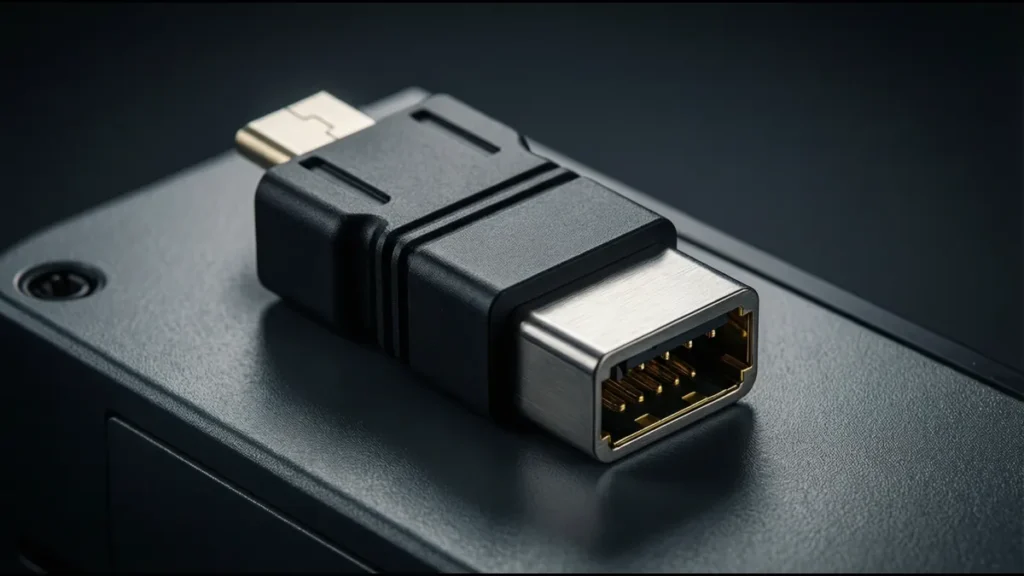
A USB connector on a factory floor operates in a fundamentally different world than one on a consumer laptop. It handles oil mist, metal shavings, 85°C ambient heat, continuous vibration from nearby machinery, and operators who insert and remove cables wearing gloves — sometimes the wrong way. The connector that survives five years in that environment looks different from the one in a phone charger, and the specifications that matter are not the ones highlighted on a consumer product page.
This guide breaks down what makes a USB connector “industrial grade,” how the specifications differ from consumer-grade parts, and what to look for when selecting a connector for harsh environments.
What Defines an Industrial USB Connector
The term “industrial USB connector” isn’t governed by a single standard. There’s no USB-IF certification for industrial use. Instead, it’s a combination of specifications that together make the connector suitable for harsh environments:
| Specification | Consumer Grade | Industrial Grade | Why It Matters |
|---|---|---|---|
| Operating temperature | 0°C to +70°C | −40°C to +85°C (or −55°C to +125°C) | Factory floors, outdoor enclosures, vehicle cabins |
| Housing material | PBT / PA66 | LCP or PPS | Moisture absorption resistance, dimensional stability |
| Contact plating | Gold flash (0.05–0.1µ”) | 15–30µ” gold over 50µ” nickel | Corrosion resistance, mating cycle life |
| Shell material | SPCC steel, tin/nickel plate | SUS304 or SUS316L stainless | Rust prevention in humid/salty environments |
| Mating cycles | 1,500 | 5,000–10,000 | Daily use in deployed equipment |
| Vibration resistance | Not specified | 10–500 Hz, 10g per IEC 60068-2-6 | Machinery, vehicles, mobile equipment |
| Shock resistance | Not specified | 50g, 11ms per IEC 60068-2-27 | Accidental impacts, equipment transport |
| IP rating | None | IP65–IP68 (with sealing) | Dust and water ingress protection |
| Locking mechanism | Friction only | Threaded, bayonet, or push-pull | Cable retention under vibration |
No single specification makes a connector “industrial.” A connector with a −40°C rating but consumer-grade plating will fail in a humid environment. A connector with gold contacts but a PBT housing will warp in thermal cycling. The industrial designation requires the full stack.
Housing Materials: LCP vs PBT vs PPS
The connector housing is the first line of defense. Consumer USB connectors almost universally use PBT (polybutylene terephthalate) or PA66 (nylon 66) — inexpensive, easy to mold, and adequate for room-temperature environments. Industrial connectors need more.
Liquid Crystal Polymer (LCP)
LCP is the preferred material for industrial USB connectors for several reasons:
- Moisture absorption: LCP absorbs less than 0.02% moisture by weight, compared to 0.2% for PBT. In environments with humidity cycling (day/night, indoor/outdoor), absorbed moisture causes dimensional changes and eventually micro-cracking. LCP eliminates this failure mode.
- Temperature stability: LCP maintains mechanical properties from −50°C to +240°C. The connector housing won’t soften at +85°C ambient or become brittle at −40°C.
- Creep resistance: Under continuous mechanical stress (from the PCB, panel mounting, or cable pull), LCP doesn’t deform over time the way PBT does. This matters for connectors that are panel-mounted and subject to cable pull forces.
- CTE matching: LCP’s coefficient of thermal expansion (12–15 ppm/°C in-flow, 0–3 ppm/°C cross-flow) is closer to that of the metal shell and PCB than PBT’s (60–80 ppm/°C). This means less stress on solder joints and seal interfaces during thermal cycling.
Trade-off: LCP costs 2–3× more than PBT and is more difficult to mold due to anisotropic shrinkage. Tooling needs to be designed with flow direction in mind, and molding parameters are tighter.
Polyphenylene Sulfide (PPS)
PPS is an alternative to LCP, used by some Japanese manufacturers (JST, Hirose). It offers:
- Moisture absorption <0.02% (comparable to LCP)
- Operating temperature to +200°C continuous
- Excellent chemical resistance — survives oils, solvents, and fuels that degrade PBT
- Lower cost than LCP (1.5–2× PBT vs 2–3×)
PPS is slightly less rigid than LCP at elevated temperatures and has higher mold shrinkage, requiring tighter tolerance tooling. For applications involving chemical exposure (machining centers, chemical processing), PPS is often the better choice. For pure thermal and mechanical performance, LCP edges ahead.
What to Avoid
PA66 (nylon 66) is sometimes used in mid-range connectors marketed as “industrial.” It absorbs 2.5–3.5% moisture by weight — over 100× more than LCP. In any environment with humidity variation, PA66 housings will swell, crack, and eventually fail. If a datasheet says “nylon” or “PA66” without further qualification, it is not an industrial-grade housing.
Contact Systems: Plating, Base Material, and Mating Cycle Life
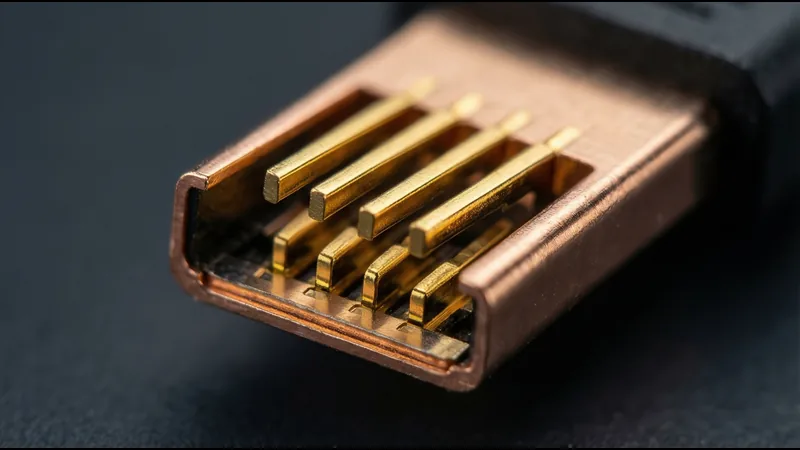
The contact is where the electrical connection happens, and it’s where most connector failures originate. Industrial USB connectors specify contacts differently from consumer parts in three areas: base material, plating, and geometry.
Base Material
| Material | Conductivity (% IACS) | Spring Properties | Typical Use |
|---|---|---|---|
| Brass (C26000) | 28% | Poor (low yield strength) | Consumer USB-A contacts |
| Phosphor bronze (C5191) | 15–20% | Excellent (high fatigue life) | Industrial USB contacts |
| Beryllium copper (C17200) | 22–25% | Superior (highest fatigue life) | High-reliability, high cycle |
| Copper alloy (proprietary) | 25–40% | Good (varies by alloy) | Modern high-performance connectors |
Brass is adequate for consumer connectors rated at 1,500 mating cycles. For industrial applications requiring 5,000–10,000 cycles, phosphor bronze or beryllium copper is necessary. The higher yield strength of these alloys means the contact beam maintains its normal force over thousands of insertions — the force that ensures reliable electrical contact and prevents fretting corrosion.
Plating Specification
Consumer connectors typically specify “gold-plated contacts” without thickness. This usually means 0.05–0.1µ” (1.3–2.5µm) gold flash — enough to look gold and pass outgoing inspection, but not enough to survive industrial service life.
| Plating | Gold Thickness | Nickel Underplate | Application | Mating Cycles |
|---|---|---|---|---|
| Gold flash | 0.05–0.1µ” | 50µ” Ni | Consumer | 1,500 |
| Selective gold | 3–10µ” on contacts, flash elsewhere | 50–100µ” Ni | Commercial/industrial | 3,000–5,000 |
| Thick gold | 15–30µ” on contacts | 50–100µ” Ni | Industrial/military | 5,000–10,000 |
The nickel underplate is not optional. Gold without nickel directly on copper leads to intermetallic diffusion — copper migrates through the gold over time, especially at elevated temperatures, forming a brittle intermetallic layer at the surface. This degrades contact resistance and increases insertion force. The nickel layer acts as a diffusion barrier; 50µ” (1.27µm) is the minimum for industrial use, 100µ” (2.54µm) for high-temperature applications.
Contact Normal Force
Normal force — the perpendicular force the contact beam applies to the mating surface — determines contact reliability. Lower force means smaller contact area, higher contact resistance, and greater susceptibility to fretting corrosion from vibration.
- Consumer USB-A: 0.8–1.5N per contact
- Industrial USB: 2.0–3.5N per contact
- High-vibration industrial: 3.5–5.0N per contact
Higher normal force increases insertion force, which can make mating difficult. Industrial connectors often address this with contact geometry that ramps the force during insertion (cam-shaped contact beams) rather than applying it linearly.
Shell Design: Stainless Steel vs Plated Steel
The metal shell of a USB connector serves three functions: mechanical protection, EMI shielding, and grounding. In industrial environments, it also needs to resist corrosion.
SPCC Steel (Consumer Standard)
SPCC (cold-rolled carbon steel) with tin or nickel plating is the consumer standard. It’s inexpensive, provides adequate EMI shielding, and works fine in office environments. The plating is a barrier coating — it prevents corrosion only as long as it’s intact. Any scratch, pinhole, or edge where the plating is thin exposes bare steel, which rusts in the presence of moisture.
SUS304 Stainless Steel
SUS304 (18% Cr, 8% Ni) is the baseline industrial shell material. It doesn’t need plating to resist corrosion — the chromium content forms a self-healing passive oxide layer. SUS304 survives salt spray testing to 500–1,000 hours per ISO 9227 without red rust.
SUS316L Stainless Steel
SUS316L adds 2–3% molybdenum, which dramatically improves pitting corrosion resistance in chloride environments. For marine, coastal, or chemical processing applications, SUS316L is the correct specification. It survives 1,500–3,000+ hours of salt spray testing.
| Shell Material | Salt Spray (hrs to red rust) | Cost vs SPCC | Application |
|---|---|---|---|
| SPCC + Ni plate | 48–96 | 1× | Indoor, controlled environment |
| SPCC + Zn-Ni plate | 200–400 | 1.5× | Light industrial, occasional moisture |
| SUS304 | 500–1,000 | 3× | Industrial, general outdoor |
| SUS316L | 1,500–3,000+ | 4–5× | Marine, coastal, chemical |
Environmental Sealing: IP Ratings in Practice
Industrial USB connectors often need to survive dust, water, and chemical exposure. The IP (Ingress Protection) rating system, defined in IEC 60529, provides a standardized way to specify this.
IP Rating Breakdown
| First Digit (Solid) | Protection | Second Digit (Liquid) | Protection |
|---|---|---|---|
| 5 | Dust-protected (some ingress, no harmful amount) | 5 | Water jets (6.3mm nozzle, 12.5 L/min) |
| 6 | Dust-tight (no ingress) | 6 | Powerful water jets (12.5mm nozzle, 100 L/min) |
| 7 | Temporary immersion (1m, 30 min) | ||
| 8 | Continuous immersion (depth/duration specified) | ||
| 9K | High-pressure, high-temperature jets |
For industrial USB connectors, IP65 is the minimum for panel-mount applications in dusty environments. IP67 is the standard for outdoor and washdown environments. IP68 is specified for submersion applications.
Critical detail: The IP rating applies to the mated condition — with a plug inserted and the cable connected. The unmated condition is a separate rating. Without a sealing cap or automatic shutter, an open industrial USB port typically rates IP54 at best. For deployed equipment where the port may be open, specify a connector with a tethered cap or an automatic sealing shutter.
Sealing Methods
Industrial USB connectors use multiple sealing interfaces:
- Panel seal: A perimeter gasket (silicone, EPDM, or fluorosilicone) between the connector flange and the enclosure panel. Gasket compression of 15–30% for silicone, 20–35% for EPDM is required for reliable sealing.
- Mated seal: A radial seal between the USB plug body and the connector port. This is the most challenging seal because USB plugs aren’t designed for sealing — they have sharp corners and rectangular cross-sections. Two approaches:
– Overmolded boot on a custom cable that mates with the connector housing (most reliable, IP67+)
– Compression ring inside the connector that seals against a standard plug (IP65, limited to specific plug geometries)
- Internal seal: Epoxy potting or overmolding of the rear contact area prevents water from traveling along contact pins to the PCB. For connectors with through-hole solder tails, the solder joint itself provides part of the seal, but potting is still recommended for IP67+.
Vibration and Shock Resistance
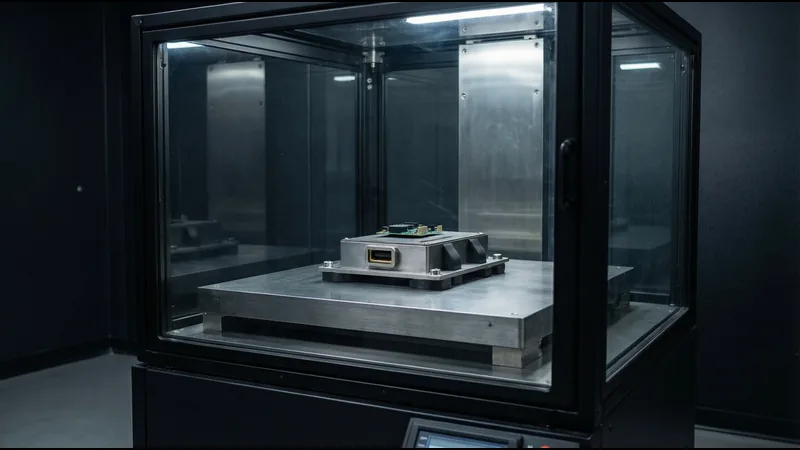
Industrial environments subject connectors to continuous vibration and occasional shock. USB connectors are particularly vulnerable because the USB plug is held in place by friction only — there’s no positive locking mechanism in the standard USB design.
Vibration
Industrial equipment generates vibration across a wide frequency range:
| Source | Frequency Range | Acceleration |
|---|---|---|
| Rotating machinery (motors, pumps) | 10–200 Hz | 1–5g |
| Pneumatic tools | 50–500 Hz | 5–15g |
| Diesel engines | 20–300 Hz | 5–20g |
| Mobile equipment (forklifts, AGVs) | 5–50 Hz | 1–3g, with shocks to 15g |
Under continuous vibration, a standard friction-fit USB connection will gradually walk out of the socket. The mating force that felt secure on the bench becomes insufficient when the connector is shaking at 10g for 8 hours a day.
Locking Mechanisms
Industrial USB connectors address this with locking mechanisms:
Threaded locking (M9, M12, M16): A threaded nut on the cable connector screws onto a threaded collar on the panel connector. This is the most robust locking method, used in automotive and heavy industrial applications. The thread size depends on the connector size — USB-A typically uses M9 or M12, USB-C uses M9.
Bayonet locking: A quarter-turn bayonet mechanism, similar to BNC or N connectors. Faster to mate/unmate than threaded, with good vibration resistance. Less common in USB connectors but available from some manufacturers.
Push-pull locking: A spring-loaded mechanism that locks automatically on insertion and releases with a pull on the connector body. Fast to operate, good for frequent mating cycles. Vibration resistance is adequate but lower than threaded.
Latch locking: Spring-loaded latches that snap into place on insertion and are released by pressing side levers. Common in automotive USB connectors. Provides audible and tactile confirmation of engagement.
Shock
Industrial USB connectors should survive shock testing per IEC 60068-2-27:
- 50g, 11ms half-sine pulse, 3 axes × 2 directions = 18 shocks total
- No disengagement, no contact interruption longer than 1µs
- No mechanical damage to connector or mating interface
Temperature Performance
USB connectors specified for industrial use must operate across a temperature range that covers both cold-start and hot-running conditions:
| Rating | Temperature Range | Typical Application |
|---|---|---|
| Commercial | 0°C to +70°C | Office, home, server room |
| Extended commercial | −20°C to +85°C | Indoor industrial, vending, kiosk |
| Industrial | −40°C to +85°C | Factory floor, outdoor enclosure |
| Automotive | −40°C to +105°C (or +125°C) | In-cabin, under-hood |
| Military | −55°C to +125°C | Defense, aerospace |
Cold Temperature Considerations
At −40°C, several things happen:
- Contact plating becomes more brittle, increasing the risk of plating fracture during mating
- Gasket materials stiffen — silicone hardens significantly below −50°C, EPDM below −40°C
- Plastic housings become more impact-sensitive; a drop at −40°C that would be harmless at +20°C can crack a PBT housing
LCP and PPS housings maintain impact resistance at −40°C. Fluorosilicone gaskets remain flexible to −60°C. For applications below −40°C, specify these materials explicitly.
High Temperature Considerations
At +85°C and above:
- PBT housings begin to soften and creep under mechanical load
- Gold plating diffusion accelerates — the nickel barrier becomes critical
- Gasket compression set increases — a gasket compressed at +85°C for months may not recover when temperature drops, creating a leak path
- Contact normal force decreases as the phosphor bronze beam relaxes
For +105°C and above (automotive, under-hood), only LCP or PPS housings with beryllium copper contacts and thick gold plating over 100µ” nickel will provide reliable long-term service.
EMI Shielding in Industrial Environments
Industrial environments are electromagnetically noisy — variable frequency drives, welding equipment, servo motors, and RF heating all generate interference. USB 3.x signals (5 Gbps and above) are particularly susceptible to EMI because the high-frequency differential pairs act as antennas.
Shielding Design
An industrial USB connector provides EMI shielding through:
- Metal shell with 360° grounding: The connector shell must make continuous 360° contact with the cable shield and the chassis ground. Fingerstock contacts or spring fingers on the shell provide this connection. A shell that grounds only through the solder tabs (not through a 360° contact) provides inadequate shielding above 1 GHz.
- Shield-to-shell transition: The cable braid must terminate to the connector shell with 360° contact — not through a pigtail wire. A pigtail connection creates an inductive loop that turns the shield into an antenna at USB 3.x frequencies.
- Connector body shielding: For USB-C connectors operating at 10 Gbps (USB 3.2 Gen 2) or 20 Gbps (USB4), the plastic housing may need embedded metal shielding or conductive coating to prevent radiation through the housing.
Shielding Effectiveness Targets
| Frequency | Shielding Effectiveness | Standard |
|---|---|---|
| 30–300 MHz | ≥ 60 dB | EN 55032 Class B |
| 300 MHz – 1 GHz | ≥ 50 dB | EN 55032 Class B |
| 1–10 GHz | ≥ 40 dB | EN 55032 Class B |
If the connector is the EMI leakage point in a system, these targets won’t be met regardless of how well the rest of the system is shielded.
USB-C in Industrial Applications
USB Type-C is increasingly specified for industrial equipment, replacing USB-A and micro-USB. The reasons are practical:
- Reversibility: Operators can insert the plug either way, reducing mating errors — important for workers wearing gloves or working in low-visibility conditions
- Power delivery: USB-C supports up to 240W (48V, 5A) via Power Delivery, sufficient to power small industrial devices through the data cable
- Alt Mode: USB-C can carry DisplayPort, HDMI, or other protocols, reducing the number of connectors on a panel
- Durability: The USB-C connector design distributes insertion force more evenly than USB-A, resulting in higher mating cycle life for equivalent contact quality
Industrial USB-C Considerations
Standard USB-C connectors (the kind on phones and laptops) are not industrial-grade. For industrial USB-C:
- Specify LCP or PPS housing, not PBT
- Require stainless steel shell (SUS304 minimum)
- Contact plating: 15µ” minimum gold over 50µ” nickel
- Mating cycles: 10,000 minimum (USB-C is rated 10,000 by design; industrial versions test to this)
- Panel-mount versions with IP67 sealing and locking mechanism
- Full 24-pin configuration for USB4 / Thunderbolt 4 compatibility
The USB-C connector’s 24-pin design means more contacts in a smaller space than USB-A, making contact quality and plating even more critical. A USB-C connector with thin gold plating will fail faster than a USB-A connector with the same plating because the contact area is smaller and the contact pressure is distributed across more points.
Selection Criteria: Matching the Connector to the Environment
Decision Framework
| Environment | Housing | Shell | Contacts | Sealing | Locking | Temperature |
|---|---|---|---|---|---|---|
| Factory floor (dry) | LCP | SUS304 | 15µ” Au / 50µ” Ni | IP54 | Latch | −20°C / +85°C |
| Factory floor (oil mist) | PPS | SUS304 | 15µ” Au / 50µ” Ni | IP65 | Threaded | −20°C / +85°C |
| Outdoor enclosure | LCP | SUS304 | 30µ” Au / 100µ” Ni | IP67 | Threaded | −40°C / +85°C |
| Marine/coastal | LCP | SUS316L | 30µ” Au / 100µ” Ni | IP67 | Threaded | −40°C / +85°C |
| Food processing (washdown) | PPS | SUS316L | 30µ” Au / 100µ” Ni | IP69K | Bayonet | −20°C / +85°C |
| Automotive (in-cabin) | LCP | SUS304 | 15µ” Au / 50µ” Ni | IP65 | Latch | −40°C / +105°C |
| Heavy machinery (high vibration) | LCP | SUS316L | 30µ” Au / 100µ” Ni | IP67 | Threaded + latching | −40°C / +85°C |
Datasheet Checklist
When evaluating an industrial USB connector, the datasheet should specify:
- Housing material and grade (not just “plastic” — LCP or PPS with specific grade)
- Contact base material and plating thickness (gold thickness in microinches, nickel underplate thickness)
- Shell material and grade (SUS304, SUS316L — not just “stainless steel”)
- Operating temperature range (both operating and storage)
- IP rating with test standard reference (IP67 per IEC 60529, not just “waterproof”)
- Mating cycle life (with test conditions specified)
- Vibration and shock test results (standard, acceleration, duration)
- Insertion and extraction force (initial and after cycling)
- Contact resistance (initial and after environmental testing)
- Insulation resistance and dielectric withstanding voltage
- Salt spray test hours (if corrosion resistance is claimed)
- Locking mechanism type and retention force
If any of these are missing, the connector is likely a consumer-grade part with an “industrial” label. The cost difference between a genuine industrial USB connector and a consumer part in a rugged-looking housing is 3–5× — but so is the difference in service life.
Common Failure Modes in Industrial USB Connectors
Understanding how connectors fail helps in specifying the right one:
Fretting Corrosion (1,000–3,000 cycles)
Small relative motion between contact surfaces — from vibration, thermal cycling, or repeated mating — wears through thin gold plating, exposing the nickel underplate. Nickel oxidizes, forming a high-resistance layer. Contact resistance increases gradually, causing intermittent data errors before complete failure.
Prevention: 15µ” minimum gold thickness, high normal force (2.5N+), locking mechanism to minimize relative motion.
Housing Creep (6–18 months)
PBT or PA66 housings under continuous mechanical stress (panel mounting, cable pull) deform slowly at elevated temperature. The connector body shifts, misaligning contacts with the mating plug. Insertion becomes difficult, then impossible.
Prevention: LCP or PPS housing. Verify panel cutout tolerances — an oversize cutout puts bending stress on the connector body.
Shell Corrosion (3–12 months in harsh environment)
Plated steel shells corrode when the plating is breached. Rust expands, deforming the shell and preventing plug insertion. In galvanic corrosion (steel shell in contact with aluminum panel), the steel shell corrodes preferentially.
Prevention: Stainless steel shell (SUS304 minimum, SUS316L for marine). Isolate dissimilar metals with a gasket or anti-corrosion compound.
Gasket Compression Set (12–24 months)
Elastomeric gaskets under continuous compression lose their elasticity — they take a permanent set and no longer seal when the connector is remated. This is accelerated at high temperature.
Prevention: Specify gaskets tested for compression set at operating temperature (ISO 815 or ASTM D395). Silicone has better compression set resistance than EPDM at elevated temperature. For applications with frequent remating, specify a gasket replacement interval.
Solder Joint Fatigue (2,000–5,000 thermal cycles)
Through-hole solder joints on USB connectors crack under thermal cycling due to CTE mismatch between the connector, PCB, and solder. This is worse for connectors with large metal shells that act as heat sinks.
Prevention: Use connectors with flexible solder tab geometry. Design the PCB with appropriate pad sizes and thermal relief. For extreme thermal cycling, consider press-fit contacts instead of solder.
Cost vs. Lifetime: The Industrial ROI Case
A consumer USB-A connector costs $0.10–0.30 in volume. An industrial USB-A connector with LCP housing, SUS304 shell, 15µ” gold contacts, and IP65 sealing costs $0.80–2.50. The price difference is 4–8×.
But the total cost of a connector failure in deployed industrial equipment includes:
| Cost Component | Typical Range |
|---|---|
| Field service call (technician time + travel) | $200–$800 |
| Replacement connector + labor | $50–$150 |
| Equipment downtime (per hour) | $500–$5,000+ |
| Lost production / contract penalty | Varies |
A single connector failure in deployed equipment costs $750–$6,000+. An industrial connector that prevents one failure over its lifetime has paid for itself 300–6,000× over.
The decision isn’t whether to use industrial-grade connectors — it’s whether the product is expected to survive in the field for more than a few months. If it is, the connector specification is the cheapest insurance in the BOM.
Related Reading: waterproof stacked USB connectors · stacked USB connector selection guide · automotive-grade stacked USB connector · IP67 vs IP68 rating guide · USB connector manufacturer China guide