
FEATURED ARTICLE
Best DC Jack for High-Current 12V/24V Equipment: Contact Area and Derating
What a current rating actually means, how to derate it for a sealed enclosure, and where the barrel jack stops scaling.
Read More →
Technical articles tagged Industrial Applications: selection guidance, design rules and field data for Industrial Applications connectors.
What a current rating actually means, how to derate it for a sealed enclosure, and where the barrel jack stops scaling.
Read More →
What a current rating actually means, how to derate it for a sealed enclosure, and where the barrel jack stops scaling.
Read More →
Why plugs walk out of vibrating panels, which jack parameters actually resist it, and how to stop detection switches from chattering.
Read More →
Selection by deployment scenario: indoor gateways, outdoor cabinets, vehicle telematics, remote meters and handheld terminals each need a different form factor and mechanism.
Read More →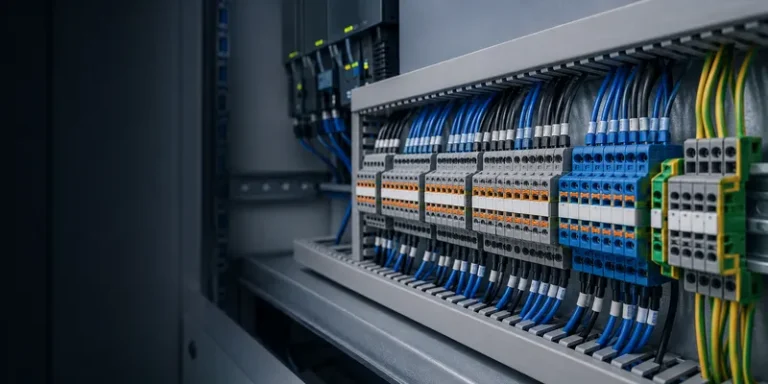
Plan terminal blocks for PLC I/O, sensors, motor circuits, PE, fused circuits and power distribution in industrial control cabinets.
Read More →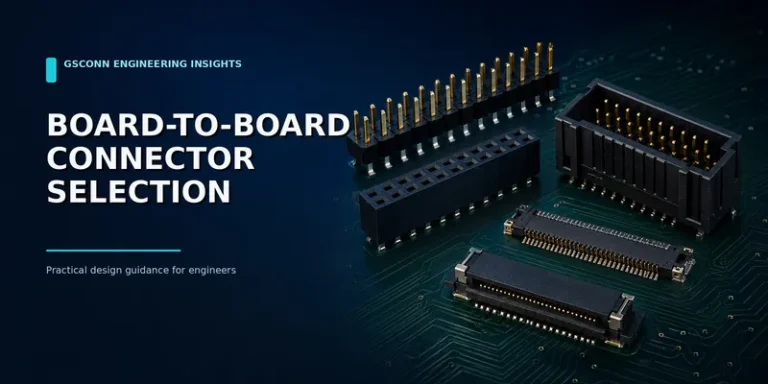
Board-to-Board Connector Selection Guide: A Practical Engineering Workflow Choosing a board-to-board (B2B) connector is not simply a matter of matching pitch and pin count. The connector also defines board spacing, assembly tolerance, serviceability, signal integrity, current density and, often, the mechanical architecture of the enclosure. This guide turns those requirements into a practical selection workflow. […]
Read More →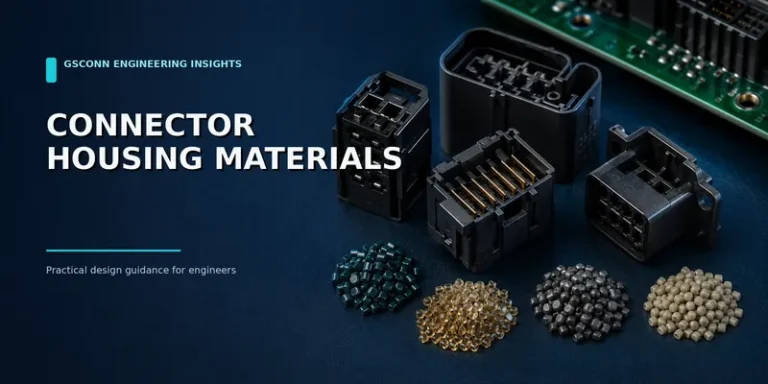
Connector Housing Materials: PBT vs LCP vs PA9T/PPA vs PPS The connector housing locates contacts, maintains creepage and clearance, survives soldering and protects the mating interface. Selecting the wrong resin grade can lead to reflow distortion, moisture-related dimensional change, latch fatigue or chemical damage. The most important correction to many material comparisons is this: polymer […]
Read More →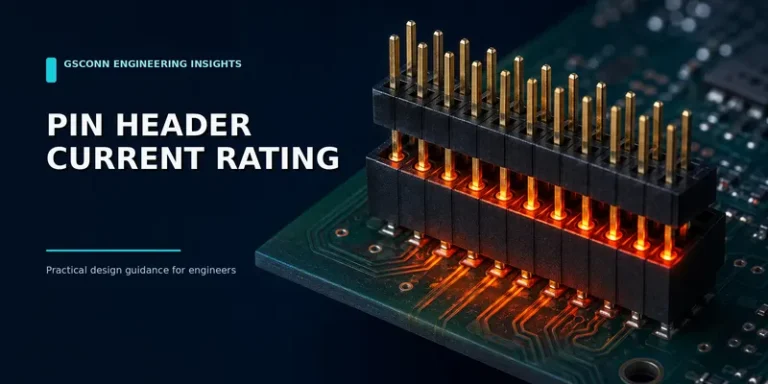
Pin Header Current Rating: Derating, Temperature Rise and Parallel Contacts Search results often assign one current value to an entire pitch—such as “3 A per pin for a 2.54 mm header.” That is not a safe design rule. Current rating belongs to a specific mated connector pair under defined test conditions. The female contact, contact […]
Read More →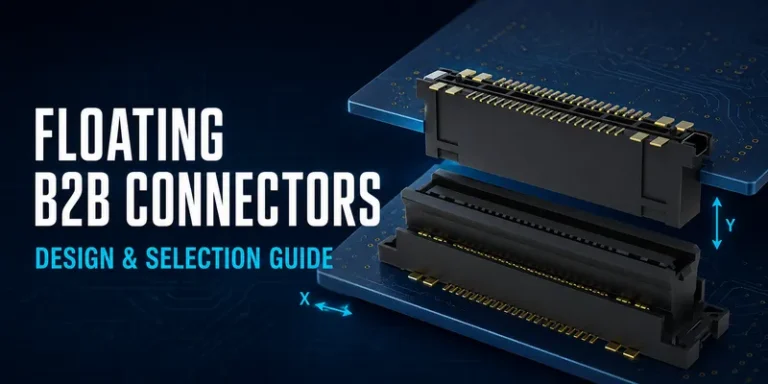
Learn what a floating board-to-board connector does, when it is preferable to a rigid B2B connector, and how to select pitch, travel, mating height, current capability, and validation tests.
Read More →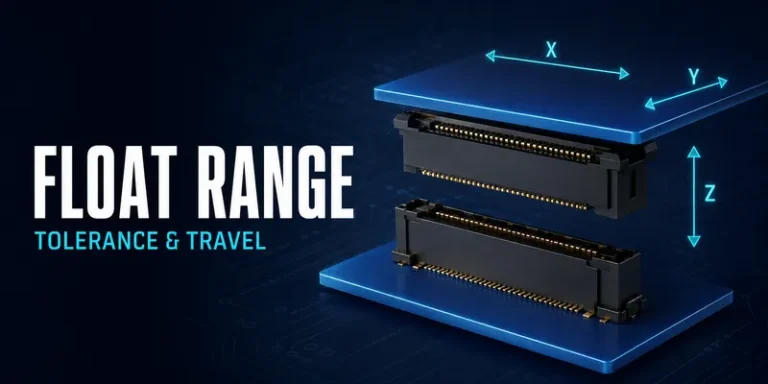
Select the right floating connector travel by calculating PCB placement error, connector position, board warp, thermal expansion, dynamic motion, and mating margin.
Read More →