
USB Connector Manufacturer China: OEM/ODM Selection Guide for Buyers and Engineers

Sourcing USB connectors from China is not difficult — thousands of suppliers list USB connectors on Alibaba, Global Sources, and Made-in-China. The difficulty is separating manufacturers from trading companies, evaluating actual production capability, and avoiding the quality gaps that don’t show up until your product is in the field.
This guide is written for engineers and procurement managers who need to source USB connectors from Chinese manufacturers — whether for standard parts, OEM customization, or full ODM development. It covers how to evaluate suppliers, what to specify, and where the common pitfalls are.
Manufacturer vs Trading Company: Why It Matters
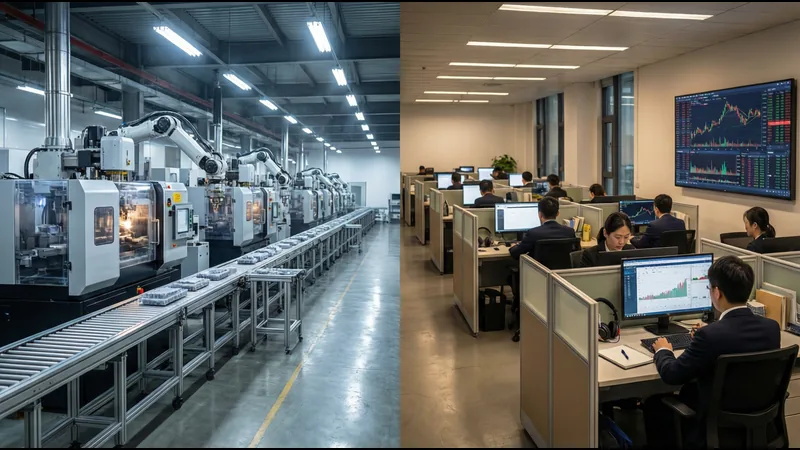
On B2B platforms, an estimated 60–70% of USB connector listings are from trading companies, not manufacturers. This isn’t inherently bad — trading companies can offer consolidated sourcing and lower MOQs — but it affects quality control, customization capability, and pricing transparency.
How to Tell the Difference
| Indicator | Manufacturer | Trading Company |
|---|---|---|
| Product range | Narrow (connectors only, maybe 1–3 connector families) | Broad (connectors, cables, adapters, adapters, memory cards) |
| MOQ | Higher (5,000–10,000 pcs for standard, 50,000+ for custom) | Lower (1,000–5,000 pcs, sometimes samples available) |
| Customization | In-house tooling, engineering team, can modify designs | Relays requirements to factory, limited technical communication |
| Lead time | 3–5 weeks standard, 6–10 weeks custom | 2–4 weeks (from stock), 8–12 weeks (custom, passes through factory) |
| Pricing | Factory price, transparent cost breakdown | Margin added on top of factory price |
| Factory audit | Welcome — will show production lines, testing equipment | May resist or arrange a “partner factory” visit |
| Technical questions | Engineers answer directly with datasheet-level detail | Sales staff relay questions, answers often delayed or vague |
| Certificates | Original certificates in company name | Copies, sometimes in different company names |
Verification Steps
- Business license check: Request the business license (营业执照). The registered scope should include “manufacturing” (生产/制造), not just “trading” (贸易/销售). Cross-check the registered address — manufacturing licenses list the factory address.
- Factory audit: Request an on-site or virtual factory tour. Look for injection molding machines, stamping presses, plating lines, and assembly areas. A manufacturer should have at least some production in-house — fully outsourced production is a trading company regardless of what the license says.
- ISO 9001 certificate: Verify the certificate covers the manufacturing location, not just a sales office. The certificate should list the factory address in its scope. Check it against the issuing body’s database — counterfeit ISO certificates are common.
- UL/TUV product certification: For USB connectors, UL or TUV certification on the specific product (not just the company) indicates the connector has been tested to a recognized standard. The certification should be in the manufacturer’s name.
- Production capacity claim verification: If a supplier claims “500,000 pcs/month capacity,” ask for production records or shipment records. A real manufacturer can provide monthly output data by product line.
Understanding Chinese USB Connector Manufacturing
Industry Structure
The Chinese USB connector manufacturing industry is concentrated in several regions:
| Region | Specialization | Key Advantages |
|---|---|---|
| Dongguan, Guangdong | High-volume USB-A, micro-USB, USB-C | Mature supply chain, fast tooling, competitive pricing |
| Shenzhen, Guangdong | USB-C, high-spec connectors, R&D | Close to electronics ecosystem, engineering talent |
| Wenzhou, Zhejiang | Mid-volume, cost-competitive | Lower labor costs, traditional connector manufacturing |
| Suzhou/Kunshan, Jiangsu | Automotive and industrial connectors | Japanese/Korean technology transfer, precision manufacturing |
Dongguan and Shenzhen account for the majority of USB connector production in China. Companies in these regions have the most mature tooling capabilities and the shortest lead times for new connector development.
Manufacturing Process Overview
A USB connector goes through these production steps:
- Stamping: Metal contacts and shells are stamped from strip material on progressive die presses. Precision stamping (±0.01mm tolerance) requires high-quality tooling — this is the primary determinant of contact consistency.
- Plating: Contacts are plated in reel-to-reel plating lines. The plating process controls gold thickness, nickel underplate thickness, and plating uniformity. Reel-to-reel plating allows selective plating (gold only on contact areas, nickel on solder tails) which reduces cost.
- Injection molding: The connector housing is injection-molded from LCP, PBT, or PPS. Molding precision affects contact alignment, mating force, and dimensional consistency across production lots.
- Assembly: Contacts are inserted into the housing (automated for high-volume, semi-manual for low-volume/custom). The shell is attached, and the connector is inspected.
- Testing: Outgoing testing includes dimensional inspection, contact resistance measurement, insertion/extraction force testing, and (for specified products) electrical performance testing.
A manufacturer that controls all five steps in-house has the best quality control. A manufacturer that outsources stamping or plating has less control over the most quality-critical processes.
Equipment to Look For
When evaluating a USB connector factory, the following equipment indicates genuine manufacturing capability:
| Process | Equipment | What It Tells You |
|---|---|---|
| Stamping | High-speed precision press (50–200 strokes/min, ±0.01mm) | Contact precision capability |
| Plating | Reel-to-reel plating line with gold thickness controller | Plating consistency, selective plating capability |
| Molding | Electric injection molding machine (100–200 ton, ±0.01mm) | Housing precision, low flash |
| Assembly | Automated contact insertion machine | Consistency, capacity, reduced human error |
| Testing | XRF plating thickness gauge, contact resistance tester, force gauge | Quality verification capability |
| Tooling | In-house mold shop (CNC, EDM, wire cutting) | Custom development speed, maintenance capability |
A factory with an in-house mold shop can develop custom connectors in 4–6 weeks instead of 8–12 weeks (mold outsourcing adds 2–4 weeks). For OEM/ODM projects, this is a critical differentiator.
OEM vs ODM: What You’re Actually Getting
OEM (Original Equipment Manufacturer)
In OEM arrangements, you provide the complete design specification — or select from the manufacturer’s existing product line — and the manufacturer produces it to your specification. The product may carry your brand, but the design is either standard or fully specified by you.
Typical OEM scenario: You need a USB-C connector with specific mounting type, plating, and shell material. The manufacturer has a similar product in their catalog. They modify the existing tooling (change the shell, adjust the contact plating) and produce it under your part number.
OEM customization scope:
- Shell material and finish (SUS304, SUS316L, tin/nickel plate)
- Contact plating thickness (3µ” to 30µ” gold)
- Housing color (for brand identification)
- Packaging and labeling
- Part number marking
- Taping and reel packaging (for automated assembly)
Lead time: 4–6 weeks for standard modifications, 6–8 weeks for non-standard modifications
MOQ: 5,000–10,000 pcs for standard modifications, 10,000–50,000 pcs for non-standard
ODM (Original Design Manufacturer)
In ODM arrangements, the manufacturer designs the connector based on your requirements. You provide the functional specification (USB standard, mounting type, environmental requirements, size constraints) and the manufacturer creates the tooling, prototypes, and production design.
Typical ODM scenario: You need a stacked USB-C + HDMI connector for a custom panel layout. No existing product matches this configuration. The manufacturer designs the connector, creates the mold, produces prototypes for your evaluation, and then moves to production after you approve the samples.
ODM project scope:
- Connector geometry and layout design
- Contact design and signal integrity optimization
- Tooling design and fabrication
- Prototype production and testing
- Design iteration based on testing feedback
- Production qualification
- Datasheet generation
Lead time: 8–12 weeks for design + tooling + prototype, 4–6 weeks for production after qualification
MOQ: 10,000–50,000 pcs (tooling cost amortization requires this volume)
Tooling cost: $5,000–$25,000 depending on complexity (stacked/multi-port connectors are at the higher end)
Which to Choose
| Factor | OEM | ODM |
|---|---|---|
| Product uniqueness | Standard or slightly modified | Fully custom design |
| Development cost | Low (existing tooling) | High (new tooling) |
| Lead time | 4–6 weeks | 12–18 weeks |
| MOQ | 5,000–10,000 | 10,000–50,000 |
| IP ownership | Manufacturer owns design | Negotiable (you may own the design) |
| Best for | Products where a standard connector works | Products with unique form factor or functionality |
Specifications That Matter When Sourcing
Contact Plating
This is the single most common area where Chinese connector suppliers cut costs. “Gold-plated contacts” on a datasheet can mean anything from 0.05µ” flash gold (consumer grade, 1,500 cycle life) to 30µ” thick gold (industrial grade, 10,000 cycle life).
| Specification to Request | What to Verify |
|---|---|
| Gold thickness in microinches (µ”) | XRF measurement report — not just datasheet claim |
| Plating area specification | “Gold on contact zone, nickel on solder tails” — selective plating |
| Nickel underplate thickness | 50µ” minimum for industrial, 100µ” for high-temperature |
| Plating uniformity | ±15% across the reel, ±20% between lots |
| Plating adhesion | Tape test per ASTM B489 |
| Plating porosity | Nitric acid vapor test per ASTM B735 |
Materials
| Component | What to Specify | What to Verify |
|---|---|---|
| Housing | LCP (e.g., Vectra E130i) or PPS — not “plastic” or “PBT” | Material certificate from supplier (Toray, Celanese) |
| Contacts | Phosphor bronze C5191 or beryllium copper C17200 — not “copper alloy” | Material test report (composition analysis) |
| Shell | SUS304 or SUS316L — not “stainless” or “nickel-plated steel” | Material certificate, salt spray test report |
| Gasket (if sealed) | Silicone, EPDM, or fluorosilicone — specify durometer and compound | Material data sheet with compression set data |
Performance Testing
Request test reports for:
| Test | Standard | Pass Criteria |
|---|---|---|
| Mating cycle life | USB-IF Compliance | 5,000 cycles (industrial), 10,000 (USB-C) |
| Contact resistance | EIA-364-23 | ≤ 30mΩ initial, ≤ 50mΩ after cycling |
| Insulation resistance | EIA-364-19 | ≥ 100MΩ at 500V DC |
| Dielectric withstanding | EIA-364-20 | No breakdown at 500V AC for 1 minute |
| Insertion force | EIA-364-29 | Per USB spec (USB-A: ≤ 35N, USB-C: ≤ 20N) |
| Extraction force | EIA-364-29 | Per USB spec (USB-A: ≥ 10N, USB-C: ≥ 8N) |
| Temperature cycling | IEC 60068-2-14 | −40°C to +85°C, 500 cycles, no degradation |
| Damp heat | IEC 60068-2-78 | 40°C/93%RH, 96 hours, no corrosion |
| Salt spray | ISO 9227 | 500 hours (SUS304), 1,500 hours (SUS316L) — no red rust |
| Vibration | IEC 60068-2-6 | 10–500Hz, 10g, no contact interruption > 1µs |
| Shock | IEC 60068-2-27 | 50g, 11ms, no disengagement |
Pricing Structure and Negotiation
Typical Pricing (FOB China, 10,000 pcs MOQ)
| Connector Type | Consumer Grade | Industrial Grade | High-Reliability |
|---|---|---|---|
| USB-A female, SMT | $0.08–0.15 | $0.25–0.60 | $0.80–1.50 |
| USB-A female, DIP | $0.06–0.12 | $0.20–0.50 | $0.70–1.30 |
| USB-C, SMT | $0.12–0.25 | $0.40–0.90 | $1.20–2.50 |
| USB-C, mid-mount | $0.15–0.30 | $0.50–1.10 | $1.50–3.00 |
| Stacked USB-A (dual) | $0.15–0.30 | $0.50–1.20 | $1.50–3.00 |
| Stacked USB-C (dual) | $0.25–0.50 | $0.80–1.80 | $2.50–5.00 |
| RJ45 + USB combo | $0.50–1.00 | $1.50–3.50 | $4.00–8.00 |
| Waterproof USB-C (IP67) | — | $1.20–2.80 | $3.50–6.50 |
| Custom ODM (amortized tooling) | — | $0.80–3.00+ | $2.50–8.00+ |
Cost Drivers
The price within each category is driven by:
- Gold thickness: Gold is the single most significant material cost. Going from 3µ” to 15µ” gold increases connector cost by 30–60%. Going from 15µ” to 30µ” adds another 15–25%.
- Shell material: SUS304 costs 2–3× SPCC steel. SUS316L costs 1.3–1.5× SUS304. For connectors where the shell is a significant portion of the mass (USB-A, stacked connectors), this has a noticeable impact.
- Housing material: LCP costs 2–3× PBT. For small connectors where housing material is a small portion of total cost, the impact is modest ($0.02–0.05). For larger connectors (stacked, combo), it’s more significant.
- Volume: Pricing steps down at 5K, 10K, 50K, 100K, and 500K pieces. The 10K–50K tier is typical for mid-volume production. The 100K+ tier is where pricing becomes most competitive.
- Tooling amortization: For custom connectors, tooling cost ($5,000–$25,000) is amortized across the production volume. At 10K pieces, tooling adds $0.50–$2.50 per connector. At 100K pieces, it adds $0.05–$0.25.
Negotiation Levers
- Payment terms: 30% deposit + 70% before shipment is standard. For established relationships, 30% deposit + 70% after inspection (or against copy of B/L) is negotiable. Net 30 terms require 3–5 orders of consistent volume.
- Price breaks: Always request pricing at 5K, 10K, 25K, 50K, and 100K. This reveals the manufacturer’s cost structure and helps you plan order quantities.
- Tooling cost: For ODM projects, tooling cost is often negotiable. Some manufacturers waive tooling cost in exchange for a volume commitment (e.g., “tooling is free with a 100K piece commitment over 12 months”).
- Ex-works vs FOB: FOB Shenzhen or FOB Hong Kong is standard. Ex-works shifts all logistics cost and risk to you — only accept this if you have a freight forwarder you trust.
Quality Control: Pre-Production, In-Process, and Outgoing
Pre-Production (PPAP)
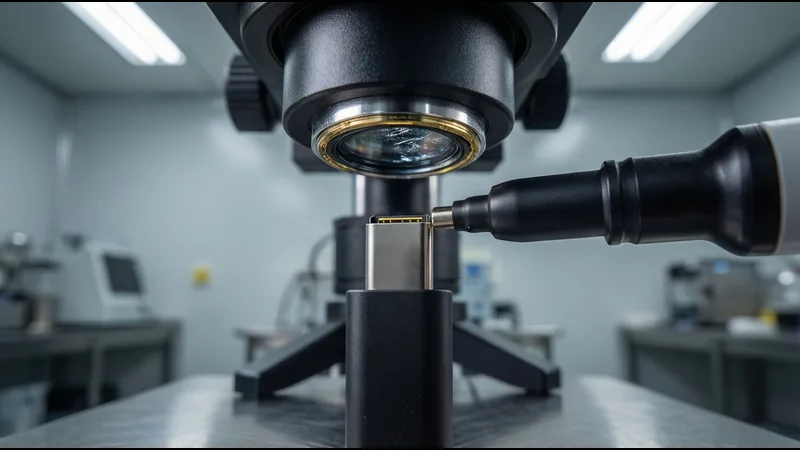
Before mass production begins, request a Production Part Approval Process (PPAP) or equivalent:
- Dimensional report: Full measurement of all critical dimensions from a sample of 30–50 parts
- Material certificates: For housing, contacts, and shell
- Plating thickness report: XRF measurement from 5 positions on the contact, 10+ samples
- Functional test report: Insertion/extraction force, contact resistance, mating cycle test on 30+ samples
- First article inspection (FAI): A signed-off sample that becomes the reference for production
In-Process Quality Control
| Check | Frequency | Method |
|---|---|---|
| Contact dimension | Every 500–1,000 pcs | Optical comparator or vision system |
| Plating thickness | Every reel change | XRF gauge |
| Insertion force | Every 2,000–5,000 pcs | Force gauge |
| Contact resistance | Sample plan (AQL 0.65) | 4-wire Kelvin measurement |
| Visual inspection | 100% (automated) or sample (manual) | AOI or visual |
| Housing flash/burr | Sample plan | Visual or optical |
Outgoing Quality Control (OQC)
| Check | AQL | Method |
|---|---|---|
| Dimensional | 0.65 (critical), 1.5 (non-critical) | Calipers, pin gauge, go/no-go |
| Functional (mating) | 0.65 | Mating cycle test, 10 cycles |
| Electrical (contact resistance) | 0.65 | Kelvin 4-wire, ≤ 30mΩ |
| Visual (cosmetic) | 2.5 | Visual inspection |
| Packaging/labeling | 2.5 | Visual check against specification |
Third-Party Inspection
For shipments above 10,000 pieces, hire a third-party inspection company (SGS, Intertek, TÜV, or a local Chinese inspection firm) to perform pre-shipment inspection. Cost is $200–$400 per inspection (1–2 man-days), which is negligible relative to the value of catching a quality issue before shipment.
Inspection scope should include:
- AQL sampling per ISO 2859-1 (typically Level II, AQL 0.65 for critical defects)
- Dimensional verification against drawing
- Functional testing (mating, contact resistance)
- Plating thickness verification (XRF)
- Packaging and labeling verification
Common Pitfalls When Sourcing from China
1. “Gold-Plated” Without Thickness
The most common quality issue. Datasheet says “gold-plated contacts” — actual plating is 0.05µ” flash gold. The connector works in evaluation but fails after 500–1,000 mating cycles in the field.
Solution: Always specify gold thickness in microinches. Require XRF plating reports with every shipment. Verify thickness on incoming inspection — an XRF gauge costs $8,000–$15,000 but pays for itself by catching one bad lot.
2. Material Substitution Without Notification
Manufacturer quotes LCP housing, then substitutes PBT in production to reduce cost — without telling you. The connector looks identical but fails in thermal cycling.
Solution: Require material certificates with every shipment. Verify with a burn test (LCP and PBT have different burning characteristics and ash residues) or infrared spectroscopy. Include material verification in your incoming inspection plan.
3. Shell Material Downgrade
Quoted SUS304, supplied 430 ferritic stainless (cheaper, less corrosion resistant). Or quoted SUS316L, supplied SUS304 with a “316L” label.
Solution: Require material certificates from the steel mill. Verify with a handheld XRF analyzer (checks Cr, Ni, Mo content). For critical applications, send samples to a lab for spectrographic analysis.
4. Reduced Gold Area
Selective plating specified as “gold on contact zone (3mm length)” — actual gold area reduced to 1mm to save plating cost. Contacts work initially but fail faster because the wear track extends beyond the gold area.
Solution: Specify gold area dimensions on the drawing. Verify with XRF mapping — measure gold thickness at multiple positions along the contact beam.
5. Inconsistent Mating Force
Mating force varies widely across a production lot — some connectors are too loose (poor contact), some are too tight (difficult to insert). This indicates inconsistent stamping or worn tooling.
Solution: Specify insertion/extraction force range on the drawing. Include force testing in OQC (AQL 1.5). Force variation across a lot should be less than ±20% of nominal.
6. Tooling Wear Not Addressed
Connector dimensions drift as stamping tooling wears. Early production lots meet spec; later lots are out of tolerance. The manufacturer doesn’t flag this because their dimensional check frequency is too low.
Solution: Request tooling maintenance records. Increase dimensional check frequency for lots produced more than 6 months after tooling fabrication. Require dimensional verification with every shipment, not just first article.
Building a Long-Term Supplier Relationship
Start Small, Scale Gradually
- Initial order: 1,000–5,000 pieces for evaluation. Test thoroughly — dimensional, electrical, environmental, mating cycle. Don’t skip environmental testing because “it’s a standard part.”
- Pilot production: 10,000–50,000 pieces. Implement incoming inspection. Track defect rates and failure modes. Provide feedback to the manufacturer — good manufacturers respond to technical feedback and improve.
- Volume production: 50,000+ pieces per order. Negotiate pricing based on annual volume commitment. Consider Kanban or VMI (vendor-managed inventory) for stable-demand parts.
- ODM development: Only after establishing trust through 2–3 successful OEM orders. ODM projects require deeper collaboration and greater trust — the manufacturer is investing engineering time in your project.
Communication Best Practices
- Drawings, not emails: Communicate requirements through detailed drawings and specifications, not email descriptions. A drawing is unambiguous; an email is not.
- One technical contact: Designate one technical contact on each side. Multiple contacts lead to miscommunication and conflicting requirements.
- Sample approval cycle: Never skip the sample approval step. For each order, require a pre-production sample (golden sample) that you approve before mass production begins. This sample becomes the reference for quality disputes.
- Visit annually: If your volume justifies it, visit the factory annually. This maintains the relationship, allows you to see process improvements (or degradation), and signals that you’re a serious customer.
- Pay on time: Chinese manufacturers prioritize customers who pay on time. Late payments result in lower priority for your orders, and eventually, quality corners cut to maintain margin.
Red Flags When Evaluating Suppliers
| Red Flag | What It Indicates |
|---|---|
| Cannot provide XRF plating report | No plating control, likely thin gold |
| Cannot provide material certificates | Materials may be substituted |
| ISO 9001 certificate in different company name | Trading company, not manufacturer |
| Refuses factory visit (or only shows a “partner factory”) | Trading company |
| No in-house tooling capability | Cannot do ODM, dependent on external tooling shop |
| Price 30%+ below market average | Quality corners being cut somewhere |
| Cannot answer technical questions directly | Sales company, not engineering-driven |
| Reluctant to provide samples for testing | Hiding quality issues |
| No test equipment visible during factory tour | Testing is outsourced or not performed |
| Promises 2-week lead time on custom connectors | Lying — custom tooling alone takes 4–6 weeks |
Checklist: Questions to Ask a Prospective USB Connector Manufacturer
- Are you the manufacturer or a trading company? Can you show your business license?
- What is your monthly production capacity for [connector type]?
- What plating line do you use? Can you do selective plating?
- What is your standard gold thickness? What is the maximum you can plate?
- Do you have XRF equipment for plating thickness verification?
- What housing materials do you offer? Can you mold LCP and PPS?
- Do you have an in-house tooling shop? Can you show me the CNC/EDM equipment?
- What is your standard MOQ for modified products? For fully custom products?
- What is your tooling cost for a [describe connector] custom design?
- What is your lead time for first article? For mass production?
- Can you provide plating reports, material certificates, and dimensional reports with every shipment?
- What testing do you perform on outgoing product? What AQL do you use?
- Can you provide UL or TUV certification for this specific product?
- Can you provide references from other customers (in my industry)?
- What is your quality issue resolution process? Do you offer replacement or credit for defective product?
A manufacturer who answers these questions directly and completely is worth evaluating further. One who hedges, delays, or gives vague answers is not — regardless of how attractive the pricing seems.
Related Reading: stacked USB connector OEM manufacturer · industrial USB connector guide · USB4 connector selection guide · USB connector signal integrity specs