
Connector Obsolescence: Last-Time-Buy Planning Guide
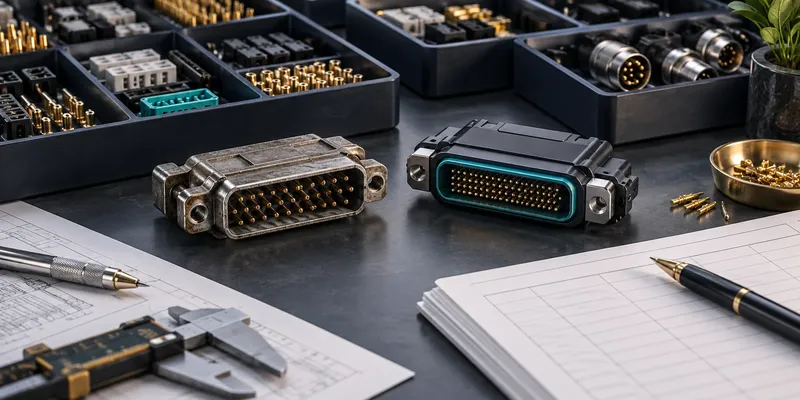
A connector discontinuation notice creates two decisions: how to keep production running and how to support the product after the final shipment. A last-time buy can bridge that gap, but buying several years of stock without a replacement plan can create a different supply problem.
Treat obsolescence as an engineering and operations task. Purchasing needs a demand forecast; engineering needs a validated path forward; quality needs traceability and storage controls.
Establish what the notice actually changes
Confirm the exact manufacturer part numbers, variants and manufacturing changes covered by the notice. Record the final order date, shipment deadline, minimum quantities and order conditions. Do not assume a family-level announcement affects every finish or packaging option equally.
Map each affected item to production BOMs, service assemblies and mating parts. Include loose contacts, housings, seals and application tooling: continued availability of a header is not enough if its cable-side terminal disappears.
Compare the response options
| Option | Useful when | Main trade-off |
|---|---|---|
| Last-time buy | Demand is bounded and a transition needs time | Inventory cost and forecast uncertainty |
| Qualified alternative | A candidate can meet the application requirements | Engineering and production validation |
| Assembly redesign | No suitable alternative exists | Development schedule and downstream changes |
| Traceable remaining stock | A controlled quantity can bridge a short gap | Limited availability and lot consistency |
Do not assign a universal lead time to replacement qualification. Simple low-risk changes and regulated long-life products require different evidence and approval schedules.
Calculate net demand, not just annual usage
Use a planning model that distinguishes demand from supply:
LTB quantity = max(0, forecast production usage + service demand + qualification/scrap allowance + justified buffer − usable stock − confirmed usable inbound supply).
For example, assume 30,000 pieces for remaining production, 4,000 for service, 1,000 for qualification and scrap, and a 3,000-piece uncertainty allowance. With 6,000 usable pieces on hand and 2,000 confirmed inbound, the net buy is 30,000 pieces. This is a planning illustration, not a recommended buffer percentage.
Model low, expected and high demand scenarios. Check the impact of a delayed redesign, extended service obligations and a lower-than-forecast production run. Translate production quantities into connector usage using the BOM quantity per assembly.
Check whether stock will remain usable
Ask the manufacturer for storage and packaging guidance for the exact materials and finish. There is no universal five- or ten-year shelf life for every connector. Humidity, contamination, handling, solderability and seal aging can affect usability.
Maintain lot identity and stock rotation. For a long storage horizon, define periodic inspection and any necessary solderability or functional checks. Distinguish total stock from released, usable stock; quarantined material should not reduce the calculated buy requirement.
Run the replacement programme alongside the buy
A matching footprint is only the first screen. Compare the mating interface, contact finish, electrical rating, retention, assembly process and environmental performance. Define whether mixed-brand mating is permitted or whether both halves must change together.
Release an alternative only after the required engineering and quality approvals. Update the BOM, approved vendor list, work instructions and service documentation so production can identify the correct combination.
FAQ
Is a last-time buy always necessary?
No. A qualified alternative may remove or reduce the need. Confirm its availability and production readiness before relying on it.
Can a cross-reference replace qualification?
No. It identifies a candidate; the application still determines whether the candidate is acceptable.
Prepare an obsolescence enquiry
Send GSConn the discontinued part number, drawings, mating components, notice deadlines and remaining demand. Request a documented candidate comparison and realistic qualification schedule before committing to a transition.