
Wide Temperature Stacked USB Connector: Industrial Grade (-40°C to +85°C)
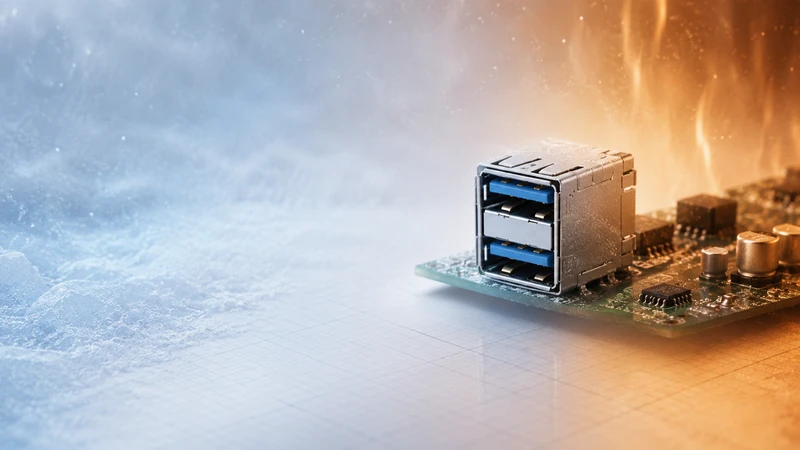
A wide-temperature USB connector is not just a standard connector with a wider number printed on the datasheet. At low temperature, plastics, plating, and solder joints become less forgiving. At high temperature, contact force, plastic creep, oxidation, and humidity exposure become long-term reliability questions.
For stacked USB connectors, the temperature rating matters even more because two ports share one housing and the upper port has a longer mechanical and thermal path to the PCB.
Quick selection guide
| Product environment | Recommended connector rating | Design comment |
|---|---|---|
| Office or indoor commercial equipment | 0°C to +70°C may be enough | Do not over-specify if the enclosure is climate-controlled. |
| Factory floor / DIN-rail cabinet | -40°C to +85°C | Check thermal cycling and vibration together. |
| Outdoor telecom or IoT cabinet | -40°C to +85°C, sealed option if exposed | Solar loading can raise enclosure temperature above ambient. |
| Vehicle interior / under-dash | -40°C to +105°C may be needed | Verify actual component temperature, not only cabin temperature. |
| Power electronics / solar inverter | Extended temperature; high creepage and sealing as needed | Heat from nearby power devices can dominate ambient conditions. |
1. What fails at temperature extremes
USB connectors do not contain active silicon, but they still age. The main failure modes are mechanical and material related.
Housing material
The connector housing must keep the contact geometry stable through reflow, operation, storage, and cleaning. Common materials include PBT, high-temperature PBT, LCP, and PPS. For industrial stacked USB, LCP is often preferred because it handles reflow well, has low moisture absorption, and keeps dimensions stable in compact contact cavities.
Avoid relying on a single material number. Ask for the actual resin family, UL flammability rating, reflow compatibility, moisture sensitivity information for SMT parts, and the operating temperature of the finished connector.
Contact spring and plating
At high temperature, contact springs can lose force over time. At low temperature, the system becomes less tolerant of stress and dimensional mismatch. Plating also matters: thin gold flash may be acceptable for low-cycle commercial products, while industrial and high-cycle designs may require thicker gold over nickel.
The datasheet values to check are contact resistance, plating thickness, mating-cycle rating, and any post-aging resistance limits.
Solder joints and PCB stress
Thermal cycling stresses the solder joint because the connector body, metal shell, solder, and FR-4 expand at different rates. A steady +85°C test is not equivalent to repeated cycling between -40°C and +85°C. If the product is mounted outdoors or powered on and off in cold weather, thermal cycling should be part of qualification.
Through-hole or hybrid mounting can improve mechanical robustness, but the PCB layout still matters. Keep the connector near mounting points and avoid a thin board edge that flexes during cable insertion.
2. Temperature rating vs real product temperature
The connector rating is usually an operating range at the component level. The product engineer must translate that into the temperature at the connector inside the enclosure.
For example, an outdoor gateway rated for +60°C ambient can easily have a connector environment closer to +75°C or +85°C if the enclosure is in direct sun. A power converter next to the USB port can add local heating. Conversely, a product in a controlled indoor cabinet may never approach +85°C, even if “industrial” appears in the marketing requirements.
A good design review asks three questions:
- What is the minimum and maximum connector temperature in the enclosure?
- How many thermal cycles will the product see over its service life?
- Are humidity, cleaning chemicals, vibration, or salt fog present at the same time?
3. Typical specification points for industrial stacked USB
| Specification item | What to request |
|---|---|
| Operating temperature | -40°C to +85°C for industrial; -40°C to +105°C for extended designs. |
| Storage temperature | Wider than operating range, if the product ships or stores outdoors. |
| Housing material | LCP or other high-temperature resin for reflow and dimensional stability. |
| Contact material | Copper alloy with stable spring properties over temperature. |
| Plating | Gold over nickel; thickness based on mating cycles and environment. |
| Solder process | Reflow or wave profile compatibility for the exact version. |
| Thermal cycling | Test condition, cycle count, dwell time, and acceptance limits. |
| Sealing | IP-rated panel sealing where liquid or dust exposure is possible. |
Do not use a table like this as a substitute for the datasheet. The exact current rating, contact resistance, and mating-cycle limits depend on the selected part number and mounting style.
4. Application notes
Outdoor telecom and IoT cabinets
Outdoor electronics see both low winter temperatures and high solar heating. The connector may also be near a cabinet door, where condensation and dust are common. Use an industrial-temperature connector and validate the panel seal if the port is externally accessible.
Factory automation
Factory cabinets may not be extremely hot, but they often combine vibration, dust, oil mist, and occasional cleaning. Through-hole mounting and a shielded shell are often more important than chasing the highest possible temperature number.
Transportation and rail
Temperature swings combine with vibration. A connector that survives thermal aging on a bench can still fail if the PCB flexes. Use bracket or panel support for stacked connectors and confirm the relevant vibration profile.
Energy storage and solar equipment
High internal temperatures are common near power devices. Keep USB connectors away from heat sinks, inductors, and high-current busbars where possible. If the service port is only used during maintenance, a covered or sealed panel-mount version may be better than an exposed board-mounted connector.
5. Qualification plan
A practical wide-temperature qualification plan should test the connector in the same condition it will see in the product. Include the PCB thickness, solder process, enclosure constraint, and mating cable if the cable is part of the shipped product. Useful checks include contact resistance before and after cycling, visual inspection for cracks or housing deformation, VBUS voltage drop under load, and a functional USB test at both temperature extremes.
For outdoor products, combine temperature cycling with humidity or condensation review. A connector can pass dry thermal cycling and still show corrosion problems when moisture is present. If the USB port is exposed on the outside of the enclosure, also repeat the panel-seal check after cycling because gaskets and plastics can relax over time.
6. Common mistakes
Confusing material temperature with connector operating temperature. A resin may tolerate solder reflow, but that does not mean the finished connector is rated for continuous operation at that temperature.
Ignoring thermal cycling. Repeated expansion and contraction can be more damaging than a steady high-temperature soak.
Forgetting humidity. Wide temperature and outdoor use often bring condensation. Consider sealing, conformal coating on the PCB, and corrosion-resistant plating.
Placing the USB connector beside a heat source. The connector rating assumes the actual connector temperature stays within limits.
Over-specifying without a reason. Extended-temperature versions can add cost and lead time. Use them when the enclosure analysis or field environment requires them.
GSConn selection notes
For GSConn stacked USB projects, start with the real environmental profile: operating temperature, storage temperature, thermal cycling, humidity, sealing, and vibration. Then select the stacked USB 2.0, USB 3.x, or Type-C variant with the appropriate mounting style. For -40°C to +105°C, high-cycle, or outdoor sealed designs, request material and qualification data for the exact part number before locking the PCB footprint.