FEATURED ARTICLE
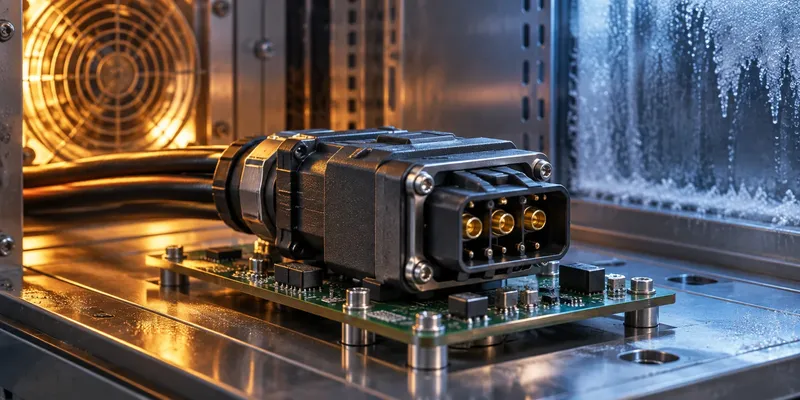
Connector Temperature Ratings: Derating and Material Limits
Understand connector operating temperature, current derating and solder-process limits, and learn which evidence to request before selecting a part.
Read More →
Expert insights, guides, and engineering resources to help you design reliable connections for any application.
Understand connector operating temperature, current derating and solder-process limits, and learn which evidence to request before selecting a part.
Read More →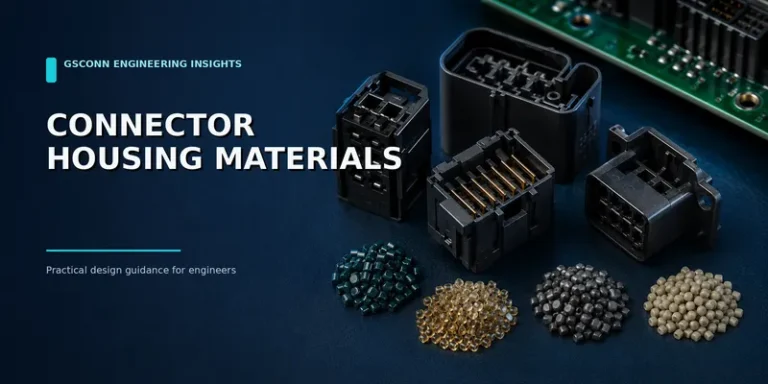
Connector Housing Materials: PBT vs LCP vs PA9T/PPA vs PPS The connector housing locates contacts, maintains creepage and clearance, survives soldering and protects the mating interface. Selecting the wrong resin grade can lead to reflow distortion, moisture-related dimensional change, latch fatigue or chemical damage. The most important correction to many material comparisons is this: polymer […]
Read More →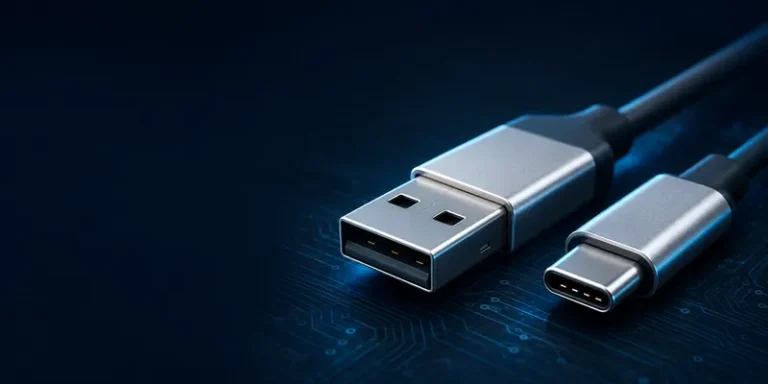
Understand USB Power Delivery connector requirements, CC negotiation, 3A versus 5A cables, EPR up to 240W and the tests needed for a reliable design.
Read More →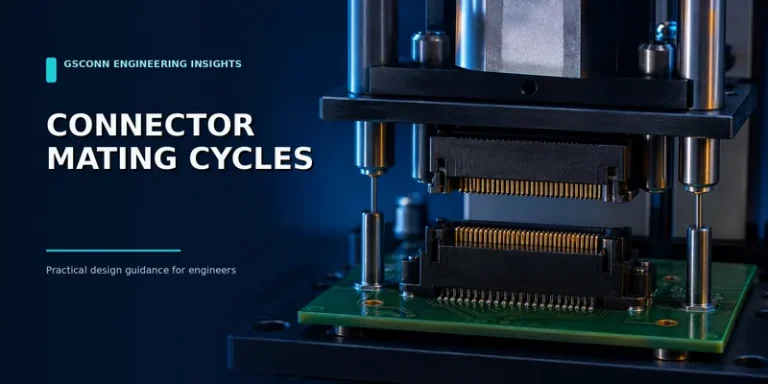
Board-to-Board Connector Mating Cycles: Durability and Life Expectancy A mating-cycle rating states how many complete insertions and withdrawals a connector has passed under defined test conditions. It does not guarantee the same life in a dusty service bay, a vibrating vehicle or a misaligned test fixture. The useful engineering question is not simply “How many […]
Read More →
Server Backplane Connector Selection for Data Center Hardware A server “backplane connector” can refer to several different interfaces: the drive-facing connector, a high-speed cable connection, a controller-to-backplane board connector, an OCP NIC interface or a power-distribution connector. Treating all of them as generic board-to-board connectors creates electrical and mechanical risk. Each location has a different […]
Read More →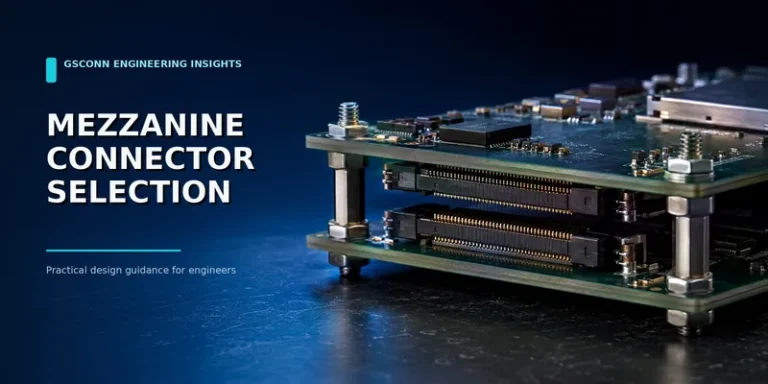
Mezzanine Connector Selection: Pitch, Stack Height and Alignment A mezzanine connector joins two parallel PCBs with a plug and receptacle. It can deliver high circuit density and a repeatable board-to-board distance in a much smaller volume than a conventional 2.54 mm header. That precision creates its own design constraints. Pitch, mated height, capture range, PCB […]
Read More →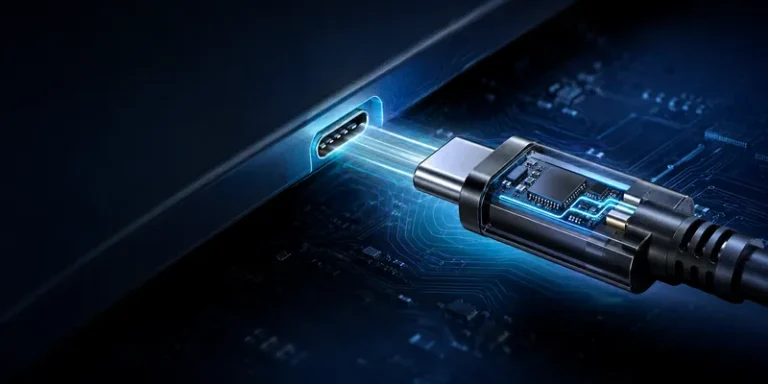
Compare USB Type-A and Type-C by mechanics, pin count, speed, power, alternate modes, durability and product-design trade-offs.
Read More →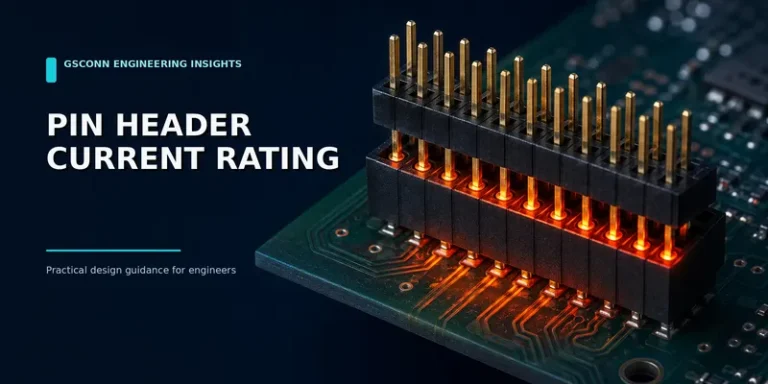
Pin Header Current Rating: Derating, Temperature Rise and Parallel Contacts Search results often assign one current value to an entire pitch—such as “3 A per pin for a 2.54 mm header.” That is not a safe design rule. Current rating belongs to a specific mated connector pair under defined test conditions. The female contact, contact […]
Read More →
Compare magnetic USB adapters with integrated pogo-pin connectors, then select contacts, retention force, sealing and validation tests for industrial products.
Read More →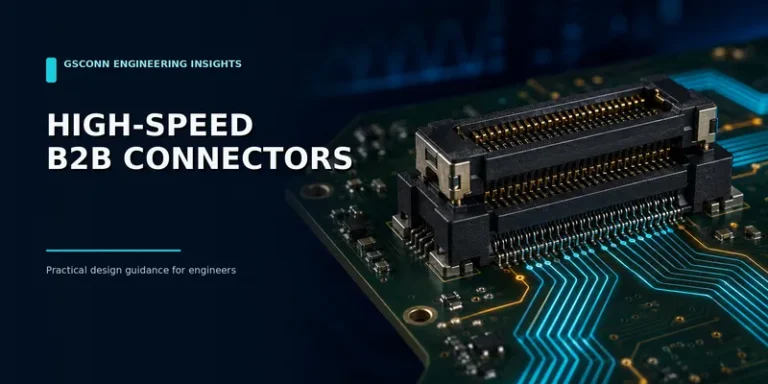
High-Speed Board-to-Board Connector Design Guide A connector does not become “high-speed” because it has fine pitch. High-speed performance comes from a controlled contact/ground architecture, a repeatable PCB launch and measured channel data. The correct selection process starts with the interface and channel budget, then evaluates the connector’s S-parameters, pin map, stack height and breakout geometry. […]
Read More →