FEATURED ARTICLE
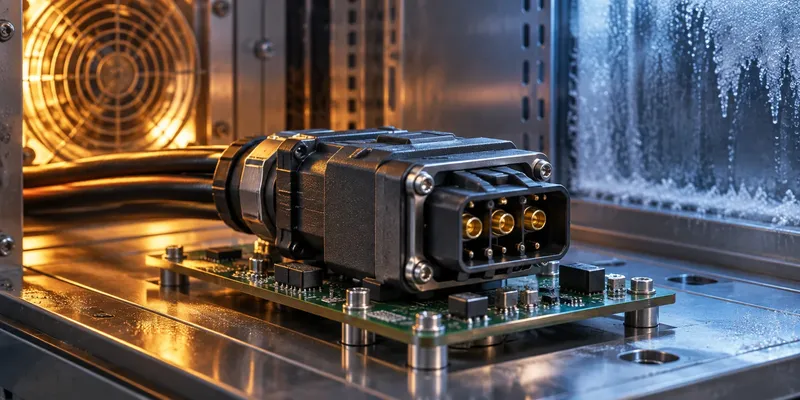
Connector Temperature Ratings: Derating and Material Limits
Understand connector operating temperature, current derating and solder-process limits, and learn which evidence to request before selecting a part.
Read More →
Expert insights, guides, and engineering resources to help you design reliable connections for any application.
Understand connector operating temperature, current derating and solder-process limits, and learn which evidence to request before selecting a part.
Read More →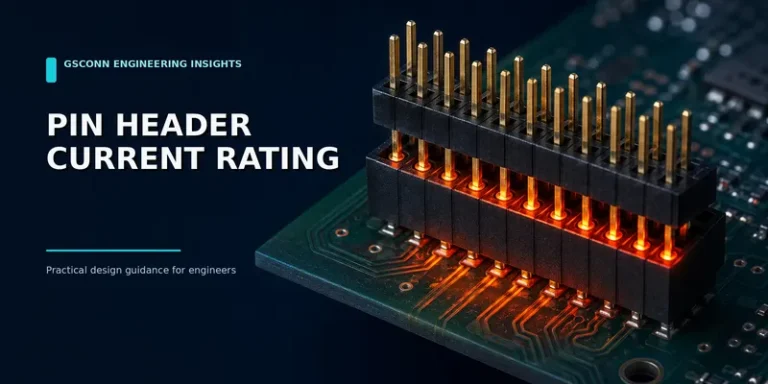
Pin Header Current Rating: Derating, Temperature Rise and Parallel Contacts Search results often assign one current value to an entire pitch—such as “3 A per pin for a 2.54 mm header.” That is not a safe design rule. Current rating belongs to a specific mated connector pair under defined test conditions. The female contact, contact […]
Read More →
Compare magnetic USB adapters with integrated pogo-pin connectors, then select contacts, retention force, sealing and validation tests for industrial products.
Read More →
High-Speed Board-to-Board Connector Design Guide A connector does not become “high-speed” because it has fine pitch. High-speed performance comes from a controlled contact/ground architecture, a repeatable PCB launch and measured channel data. The correct selection process starts with the interface and channel budget, then evaluates the connector’s S-parameters, pin map, stack height and breakout geometry. […]
Read More →
Learn how to select a marine USB connector by IP protection, corrosion resistance, sealing, vibration, UV exposure and verification requirements.
Read More →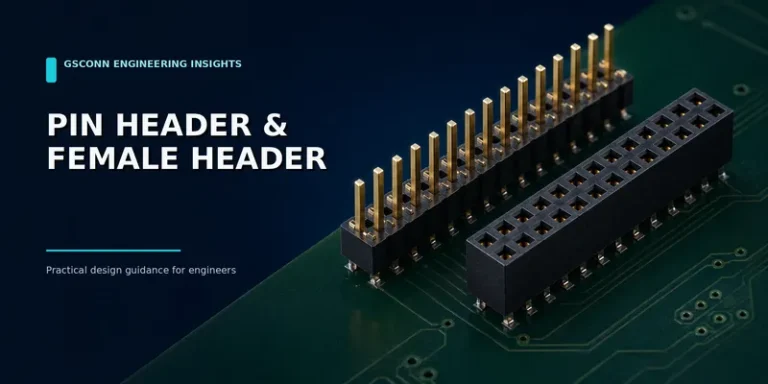
Pin Header and Female Header Connectors: A Complete Design Guide Pin headers and female headers are among the simplest PCB interconnects, but small specification differences can determine whether the final assembly fits, carries the required current and survives repeated service. This guide explains the parameters that belong on a drawing or RFQ: pitch, circuit count, […]
Read More →
Decode USB 3.x naming, compare 5, 10 and 20 Gbps implementations, and select the right connector, cable and test plan for a product design.
Read More →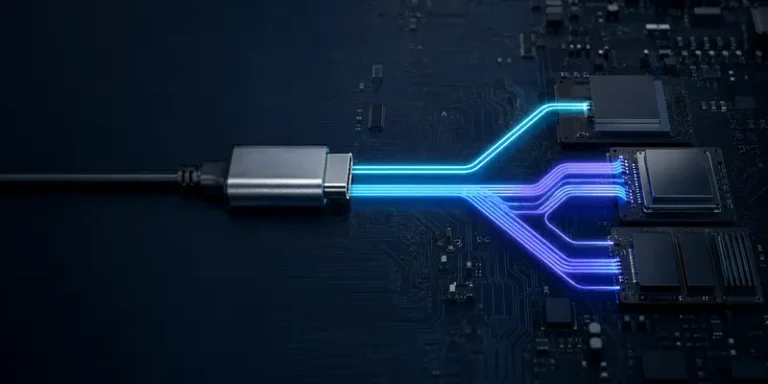
Compare USB 3.2 Gen 2×2 with USB4 at 20 and 40 Gbps by architecture, display and PCIe tunneling, compatibility, cable and product cost.
Read More →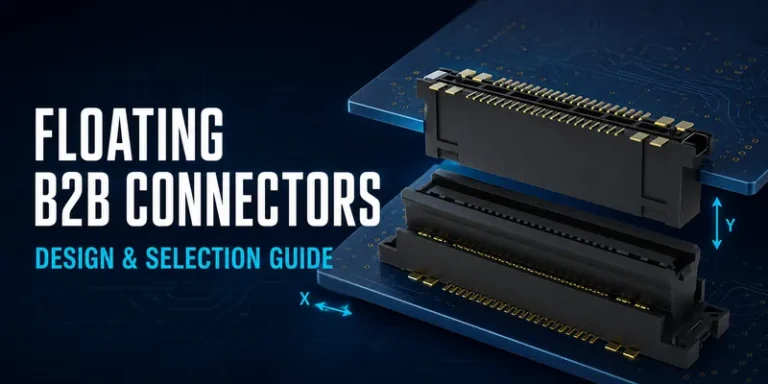
Learn what a floating board-to-board connector does, when it is preferable to a rigid B2B connector, and how to select pitch, travel, mating height, current capability, and validation tests.
Read More →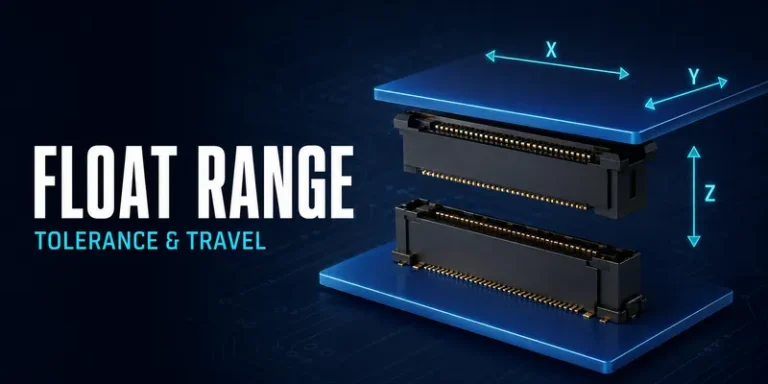
Select the right floating connector travel by calculating PCB placement error, connector position, board warp, thermal expansion, dynamic motion, and mating margin.
Read More →