
FEATURED ARTICLE
DC Jack Selection Guide: Barrel Sizes, Polarity and Current Rating
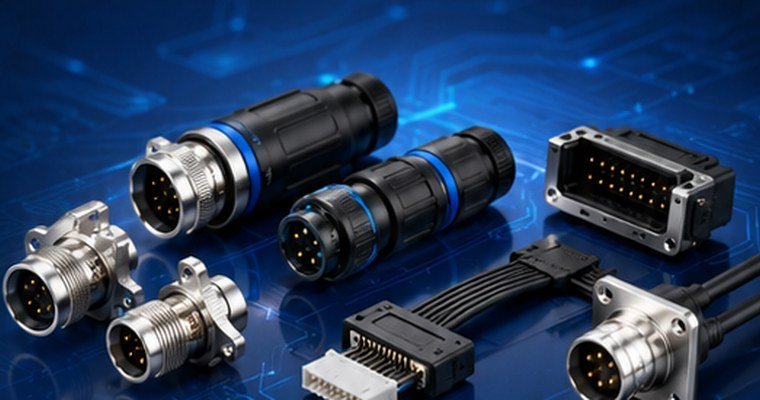
Barrel jack sizes, the 2.1 versus 2.5 mm trap, centre polarity conventions, switching contacts, and when USB-C PD is the better answer.
Read More →
Expert insights, guides, and engineering resources to help you design reliable connections for any application.
Barrel jack sizes, the 2.1 versus 2.5 mm trap, centre polarity conventions, switching contacts, and when USB-C PD is the better answer.
Read More →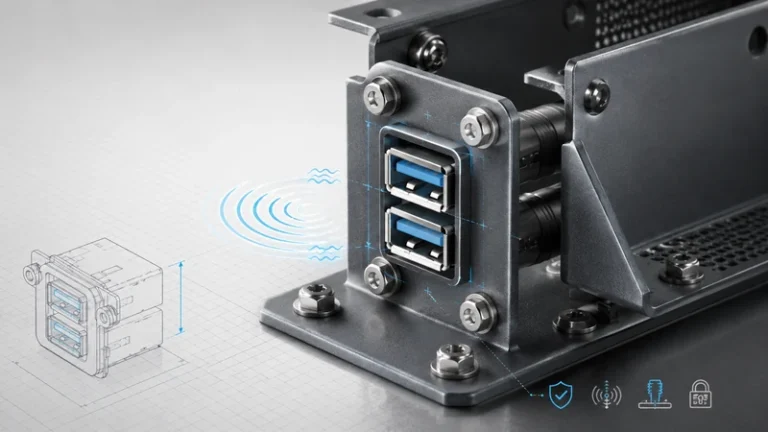
A stacked USB connector is the right answer when the product needs two accessible USB ports but does not have enough panel width for two separate connectors. It is the wrong answer when height,...
Read More →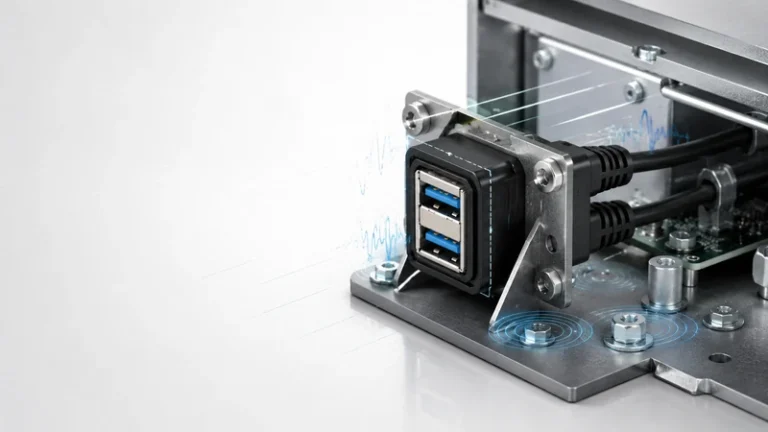
USB 3.0, also marketed in later naming schemes as USB 3.2 Gen 1, runs at 5 Gbps. At that speed, a stacked connector is no longer just a space-saving mechanical part. Its internal geometry, shield...
Read More →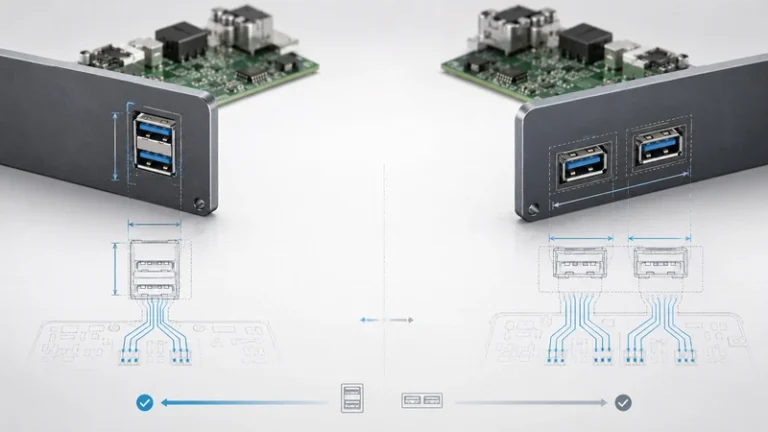
When a PCB needs two USB ports, the first decision is mechanical: put the ports vertically in one stacked connector, or place two connectors side by side. That choice affects panel width, enclosure...
Read More →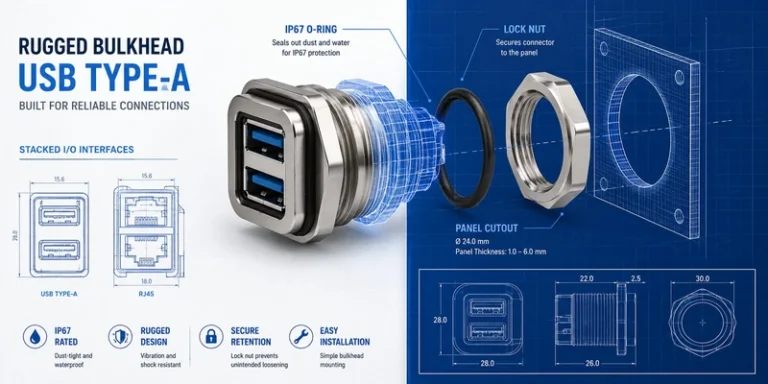
A complete selection guide to panel mount USB connectors: flange mount versus bulkhead, IP ratings from IP20 to IP68, panel cutout dimensions for USB Type-A and Type-C, and application-specific selection for server racks, industrial enclosures, test equipment, and outdoor deployments.
Read More →
A wide-temperature USB connector is not just a standard connector with a wider number printed on the datasheet. At low temperature, plastics, plating, and solder joints become less forgiving. At high...
Read More →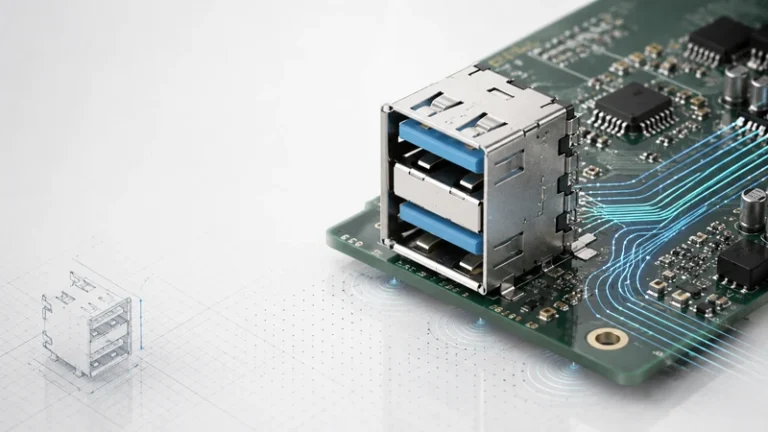
A stacked USB connector is an elegant way to put two ports into a narrow panel space. It is also a part that can create signal-integrity, mechanical, and thermal tradeoffs if it is selected only for...
Read More →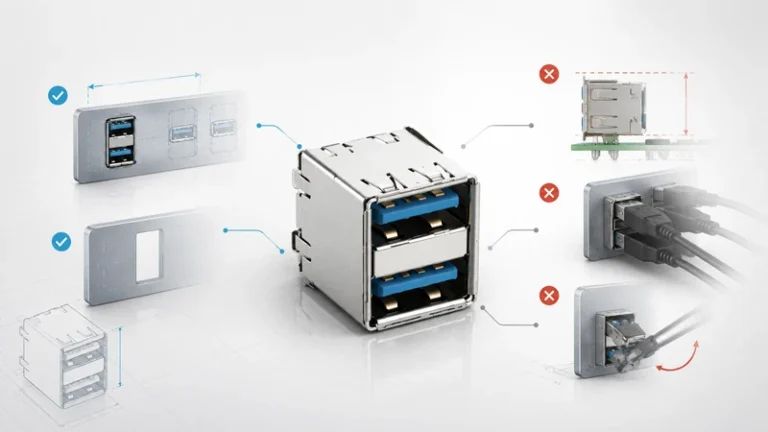
USB was not created as a high-vibration interface. It works well in stationary electronics, but the same connector can become unreliable on a DIN-rail controller, a vehicle gateway, a rail cabinet,...
Read More →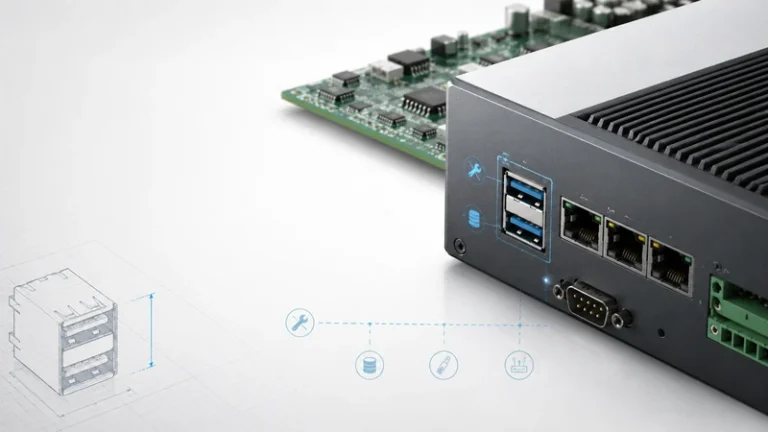
Two USB ports on an IoT gateway are usually not “extra I/O.” In most field products, each port has a job: one is reserved for service access, one is used for storage, a modem, commissioning, or...
Read More →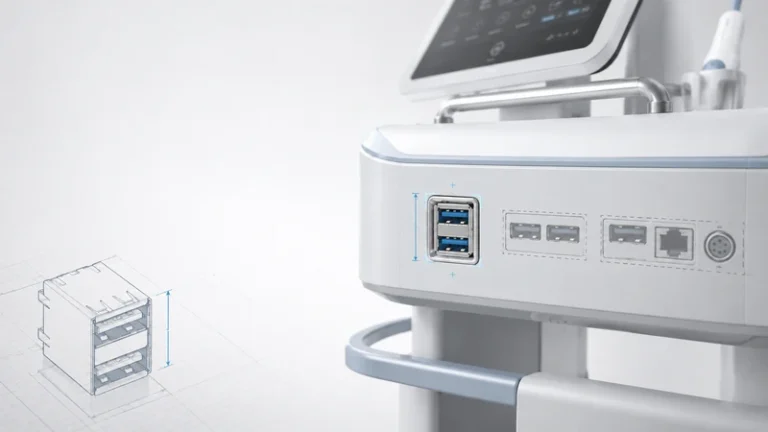
A stacked USB connector can be a good fit for medical equipment, but it does not make a device “IEC 60601 compliant” by itself. IEC 60601 compliance is evaluated at the device level. The connector...
Read More →